Appeals
First Aid for Lawsuits
Holding Trial Judges Accountable

There was a judge who, when lawyers made mistakes in his court, would say “Get a band-aid!”
But, when judges make mistakes, who gets the band-aid? Judges make mistakes all the time. We all are supposed to play by the rules … even judges ... especially judges!
A trial judge’s job is to: enforce controlling law and the rules of court! Trial judges commit errors when they fail or refuse to follow controlling law or enforce the rules of court.
When a trial judge commits an error, you MAY be able to appeal.
But!
You must preserve the error for appeal with objections and motions to cure explained earlier.
Preserving the Record

Other lessons emphasized the necessity of having every proceeding before a judge recorded by an official court stenographer (or official court audio recording) so you know in advance that an official written transcript of the proceeding will be available to send up on appeal if necessary.
That is priority #1.
Priority #2 is to freely use objections and motions to cure when the judge makes or allows errors so the judge is aware of his errors and offered a clear opportunity to cure his errors.
This is called preserving the record.
Appellate courts will not allow you to correct on appeal what you failed to correct in the trial court.
Making sure the judge aware of his errors is done by:
Objections
Objections are covered completely in a previous lesson.
Remember: they must be made in a timely manner, e.g., as soon as possible after the error occurs.
Do not wait 20 minutes to say, “Oh, by the way, your Honor, I’d like to object to what you did twenty minutes ago.” That dog won’t hunt!
Objections should be made immediately, stating clearly the grounds on which the objection is made.
Return again to the lesson on Courtroom Objections until you have memorized all of it.
Objections give judges an opportunity to cure errors and preserve the record for appeal.
Motions to Reconsider
A Motion to Reconsider can and should be made immediately. It may be spoken or written.
If written it should be filed as soon as possible, set for hearing, and contain citations to convince the appellate court (if appeal is required) that the error should be cured on appeal.
In some jurisdictions this motion does not extend the deadline to file a Notice of Appeal (explained later) so consult the official rules of appellate procedure and do not assume you have more time.
Motions for Rehearing
A written Motion for Rehearing should be made as soon as possible after an improper order is entered at the conclusion of a hearing.
This motion must be made in writing, because the hearing is over.
It is another opportunity to cite cases that support your argument, information that will be available to the appellate court if you must appeal.
In some jurisdictions this motion does not extend the deadline to file a Notice of Appeal (explained later) so consult the official rules of appellate procedure and do not assume you have more time.
Motion for New Trial
If the judge makes an error during trial, your courtroom objections are overruled, and the error causes or threatens to cause you to lose, speak this motion immediately.
If your spoken motion is denied, renew the motion in writing, citing controlling appellate court opinions in your favor, and set your motion for hearing.
In some jurisdictions this motion does not extend the deadline to file a Notice of Appeal (explained later) so consult the official rules of appellate procedure and do not assume you have more time.
Do not miss the deadline to file your Notice of Appeal.
What It Takes
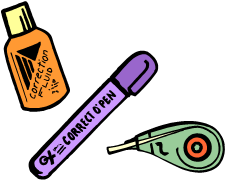
Appeals are judicial correction fluid. To be effective a lot must be done to erase the damage and cure the harm caused by the trial judge’s error.
Not all errors are appealable. Only errors that "materially' affect the outcome can be appealed. Such errors are called "material errors". They are appealable only if they were preserved in the record by timely objection and/or motion(s) giving the judge an opportunity to cure.
If you completed the previous lessons, you already know 99% of what you need to know file an effective appeal. The remaining 1% is mostly format and a few procedural steps that will be new to you but not difficult.
Now you learn how to transmit the record to the appellate court and to follow prescribed forms to show the appellate court that ALL of the following are true:
What Appeal Isn’t

Appeal is not another bite at the judicial apple. You cannot present your evidence again, make more objections, offer additional arguments, cross-examine witnesses, take depositions, or do any of the things you should have done in the lower court.
Your trial court proceeding is water under the bridge.
You cannot appeal just because you lose! Your right to appeal depends on your preserving the trial judge’s materially harmful error and transmitting that error to the appellate court with arguments supported by citations to official sources.
If the trial judge did not make any materially harmful error OR if you failed to preserve the judge’s error with timely objections and/or motions to cure, you have no right to appeal [except in certain extreme circumstances discussed later].
You cannot appeal:
You can only appeal errors made by the judge and only if they materially affect or threaten to affect the outcome of your case adversely to you!
You must meet deadly deadlines and follow specific forms for papers you file.
Specific formats for documents are required (paper color, margin size, type font and size, bindings, etc.). These vary from jurisdiction to jurisdiction. Check the official rules of appellate procedure for your jurisdiction to learn formats, filing requirements, deadlines, etc.
General principles of appellate procedure explained in this lesson are not intended to be a substitute for your knowing and following official rules of appellate procedure.
Presenting Arguments
Presenting arguments to appellate justices is no different from presenting arguments to trial judges. It’s just different format.
Many lawyers tremble at the thought of appealing cases they've lost. They don't understand appeals, so they ask their clients to hire an "appellate lawyer". (If they are smart they put this in their attorney client agreement before taking a case so the client knows in advance that losing will require shelling out more money for another lawyer.)
There’s a mystique about it, but that comes from not knowing how easy it really is to appeal. It's no more difficult than winning at the trial level. It’s actually easier, because your opponent isn't in the courtroom fighting you tooth and nail!
It's all done on paper.
Winning on appeal requires:
Some appellate courts require colored paper. Some require briefs to be bound, not stapled. Some require everything to be sent in by email. Some require everything on CD-ROM.
These requirements, however, have nothing to do with how you make your arguments on appeal.
Formalities differ, but making legal argument is simpler than at trial.
Deadlines, filing formats, paper color, binding methods, and such like can be found by referring to the official Rules of Appellate Procedure for your jurisdiction.
These formalities change suddenly without warning, so always check the most recent official rules before diving in head-first.
Forewarned is forearmed!

Paperwork
In the appellate arena, you file papers and wait for a ruling. Those papers tell the appellate court:
Most appeals are fought entirely on paper.
All paperwork!
Here are the steps in more detail:
Confusing Terms
Court orders are rendered when committed to paper and signed by a judge of competent jurisdiction. The act of signing is called rendition.
Court orders are entered when date-stamped by the clerk and filed in the court’s official record. The act of filing is called entry.
WARNING: Some jurisdictions swap these terms, and some use them indiscriminately! What you must know is that the deadline clock starts ticking when the order is signed and filed with the clerk, no matter what that procedure is called.
That’s all there is!

Be certain to meet all deadlines, follow required forms, make well-reasoned legal arguments in your briefs, and support your arguments with solid persuasive citations to controlling legal authorities.
Here are the steps again:
That’s it! There are no other filings.
And, usually, there are no hearings to attend!
There may be a few special motions for special circumstances (e.g., motion for enlargement of time, motion to reconsider, motion for oral argument etc.), but basically winning on appeal is just a matter of filing arguments on paper in proper format … and on time!
Four Questions for Appeal
Before beginning, answer these four questions:
If you’re an appellant, these are the four points you must argue successfully.
If you’re an appellee, these are the four points you must oppose successfully.
You’re probably thinking, “There must be more to it than that!”
Nope!
As this course has urged many times, the biggest problem many people have is fearing the process of litigation and appeal because they believe the process is complicated when it really isn’t.
It’s not “complicated”.
In most appeals, the winner prevails on a single issue by cogently and authoritatively answering the four appellate questions.
If you're the loser/appellant, use these questions to stay focused and convince the appellate justices to see things your way. Don’t go off on meaningless tangents. Answer these four questions for the appellate court:
If you’re the winner/appellee, answer these questions for the appellate court:
I told you this was easy.
Whose Rules Rule?

No judge is free to shoot from the hip. Any judge who claims, “I’m the law here,” is a liar and a traitor to our nation’s creed and heritage. Such behavior on the bench must be opposed with full force and effect. It is dishonor. It is a crime!
Whether it’s the lowest county magistrate or an en banc panel of nine justices on the United States Supreme Court … men are not the law.
Written law is the law … not what some pompous judge barks down from his bench.
Every judge is obligated to obey legal authorities:
Even wild west “hanging judge” Roy Bean was subject to legal authorities, for it is legal authorities that authorize what judges like him and all others are authorized to do.
Judge Bean called himself “The Law West of the Pecos”. He presided for many years as Justice of the Peace in a makeshift courtroom set up in his saloon in a South Texas town before his death in 1903. A movie was made in 1972 starring Paul Newman, “The Life and Times of Judge Roy Bean”.
Bean followed an 1879 edition of the Revised Statutes of Texas (some claim he used later versions as kindling). Without legal authority, nothing Bean did could be lawful or binding, and a higher court could step in and overrule if he were appealed. Unfortunately, neck-stretching tends to deter would be appellants.

Nothing any judge does is lawful or binding if it violates “legal authorities”. Judges are not “legal authorities”. Some are arrogant, high-minded, and think they "are the law", but they aren’t!
They all took an oath to uphold the law and to enforce the rules according to legal authorities.
To win as appellant, you must cite and argue legal authorities that demonstrate that the trial judge made materially harmful errors.
To win as appellee, you must cite and argue legal authorities that demonstrate that the trial judge did not make any materially harmful errors.
The Record

Appellate courts resist receiving evidence or hearing testimony that was not first presented to the trial judge and made part of the trial court’s official record. You cannot “create” a trial court record after-the-fact. Whatever is in the court record when appeal is taken, is ALL that’s in the record, and nothing more can be added.
You cannot move for curative orders for the first time on appeal.
You cannot examine witnesses for the first time on appeal.
You cannot take depositions during an appeal.
You either you did these things during the trial phase and made a record of them, or they are as if they never existed.
If there are deposition transcripts (or selected excerpts) that need to be reviewed by the appellate justices, they should be paid for and filed with the trial court clerk before the record is forwarded to the appellate court.
If there are exhibits that have not yet been admitted into evidence and placed in the court file, they should be filed with the trial court before the record is forwarded to the appellate court.
You cannot win on appeal without a record of at least that part of the lower court proceedings where the judge made his material error(s).
Standards of Review

These are not theatre reviews. A review on appeal is what an appellate court considers to reach it’s decision. It follows “standards of review”.
The standard of review on appeal depends on what kind of error the trial judge made.
If the trial judge made an error in his decision about fact (i.e., evidence, credibility of witness, etc.) the appellate court generally refuses to second-guess the trial judge and will let his decision stand.
If the trial judge made an error in his decision about application of law (i.e., what law controls, what that law means, etc.) the appellate court will not hesitate to ignore the trial judge’s decision and impose their own ruling, either reversing the lower court decision or sending the case back down with specific instructions.
The two primary standards of review are:
De Novo
The de novo standard is a “start over” attack, a “fresh look” by which appellate justices are not required to give deference to trial judges’ decisions but may impose their own decisions to set the matter straight.
Appellate courts owe no deference to trial judges’ decisions on questions of law.
Where facts are not in dispute, and the only issue on appeal is an appellant’s challenge to the trial judge’s application of law to fact, the appellate court must ignore the trial judge’s decision and apply the law properly.
If appellant raises an issue of law in his appeal, the appellate court may take what is called a de novo look at the record and decide what the lower court’s “legal decision” should have been … not based on the trial judge’s idea of what the law says, but solely on the appellate court’s own legal opinion and interpretation.
Frequently, the law to be decided has already been determined by an appellate decision of the very court where the appeal has been taken. A particular law and its legal interpretation may have been made clear by prior opinions of the same court. In such a case, there’ll be no patience with a contrary interpretation of the law by a trial level judge!
In other cases, the law may have been interpreted by another appellate court, whose opinion should be upheld by the justices called upon to rule. If that “other” court is the highest court of the state or the United States Supreme Court, there is nothing to be argued about … the trial judge’s contrary opinion of the law will be quashed. If the “other” court is a sister appellate level court, the court reviewing the case is not obligated to agree but may enter its own opinion of the law and whether the trial judge was in error.
Abuse of Discretion
The abuse of discretion standard requires the appellate justices to give deference to the trial judge’s decision and refuse to impose their own decisions unless there is no credible, substantial evidence to support what the lower court decided.
Different appellate courts may invent different names and apply various nuances to these two primary standards of review, however to avoid confusion you should learn these two and then, if you’re in a jurisdiction where other names or nuances are applied, you’ll understand that they are only local variations or mixtures of these two standards.
Under this standard, an appellate court must affirm the trial judge’s orders (i.e., let them stand) unless it determines the lower court judge made “a clear error of judgment or applied an incorrect legal standard.” Alexander v. Fulton County, 207 F.3d 1303, 1326 (11th Cir. 2000).
Only rarely will appellate courts set aside a trial judge’s findings of fact.
Appellate courts aren’t set up to hear witnesses testify or receive documentary evidence directly from parties, so review of evidence is seldom done under this standard of review.
The reason is common-sense and promotes fairness and judicial efficiency.
Lower court decisions frequently depend almost entirely on whether the trier of fact believes a party or his witnesses are telling the truth.
Facial expressions, body language, nervous tics, and other non-verbal activity can’t be reviewed by appellate courts by reading the court reporter’s transcript. Behavior, however, conveys volumes in court. But, words alone are what goes in the official record. Smiles or sneers, sincerity or sneakiness are silent signs we read subconsciously from behavior. A trial judge, having opportunity to consider behavior as well as words in reaching decisions, is thus presumed to have acted on information the appellate court cannot normally review (unless you make a point of verbalizing such behavior in a way the court reporter can enter into the record. See sidebar.)
Since appellate courts almost never take live testimony from witnesses whose demeanor they can observe first-hand, they rarely challenge trial judges’ findings based on credibility.
Appellate courts give great deference to trial judges’ findings of fact, unless appellant makes a convincing argument showing the trial judge’s findings of fact were, in fact, as appellate courts sometimes put it, “clearly erroneous”.
In such cases an appellate court may rule the trial judge abused his discretion.
In general, however, it is extremely rare for appellate justices to second-guess a trial judge on findings of fact.
Which Standard to Apply
Which standard of review to apply depends on what was decided by the trial judge:
Questions of Law
The standard of review when an appellant challenges a trial court’s application of law to undisputed facts is called “de novo“.
On questions of law, where facts are not in dispute, appellate courts give no deference to a trial court’s conclusions.
If an appellate court is reviewing a trial judge’s finding as to the application of law to fact and finds the law was misapplied, it must apply the law correctly.
Application of law to undisputed facts is the exclusive province of appellate courts.
Questions of Fact
The standard of review when an appellant challenges a trial court’s decision as to the weight or credibility of evidence, i.e., facts, is called “abuse of discretion”.
It is is exactly what its name suggests.
Trial judges have wide discretion to make decisions based on fact, but their discretion may not be abused.
On questions of fact (i.e., decisions based on examination of evidence, credibility of witnesses, etc.) appellate courts are required to presume the
trial judge acted correctly and give great (but not unlimited) deference to his decisions unless “clearly erroneous”.
Unless the trial judge’s decision based on record evidence was “clearly erroneous”, the lower court decision must stand.
Appellate courts must accept a trial court’s findings of fact unless the appellate court has a “definite and firm conviction that a mistake has been committed.” Inwood Laboratories, Inc. v. Ives Laboratories, Inc., 456 U.S. 844, 855 (1982). Concrete Pipe and Prods. v. Construction Laborers Pension Trust, 508 U.S. 602, 623 (1993).
An appellate court may examine evidence in the record and the trial judge’s decisions drawn from that record evidence to determine if the trial judge’s decision was an abuse of the trial judge’s wide discretion.
Appellate justices might not “see” record evidence in the same light. Based on their own personal opinions, they might be tempted to second-guess the trial judge.
However! If there is “substantial evidence” to support the trial judge’s decision, it must stand.
Substantial evidence is more than a mere speck. It is evidence sufficient to persuade a reasonable mind to accept it as “adequate to support a conclusion.” Richardson v. Perales, 402 U.S. 389, 401 (1971).
It is rare for a trial court’s decisions on evidence to be set aside on appeal.
To put it more strongly, appellate courts will not set aside a trial judge’s fact-based decision if there is any credible record evidence to support the trial court’s decision.
To put it yet another way, appellate courts will only set aside a trial judge’s fact-based decision if it is “arbitrary, fanciful, or unreasonable and no reasonable person would take the view of the trial court”. Reynolds v. State, 934 So.2d 1028, 1031-32 (Fla. 2006).
Mixed Questions of Law and Fact
When an appellant challenges a trial judge’s decisions on both questions of fact and questions of law, the appellate court deals with the decisions separately.
On questions of fact, the appellate court will give deference to the trial judge’s decisions, applying the abuse of discretion standard of review.
On questions of law, the appellate court will give no deference to the trial judge’s decisions, applying the “de novo” standard of review.
Questions of Equity
On questions of equity, appellate courts apply the “abuse of discretion” standard of review.
Equitable decisions on issues such as “clean hands”, “estoppel” and “laches” are primarily based in fact (i.e., credibility of witnesses, reliability of tangible evidence, etc.) and are, therefore, presumed better decided at the trial level unless “clearly erroneous”.
Rehear & Reconsider
These two are not the same!
If you don’t like what a trial judge’s order says, you can:
It is always a good idea to file one or both of these motions after receiving an adverse ruling from a judge.
Even if the judge denies your motion(s), they will strengthen your record for appeal by showing how you tried your very best to get the judge to do the right thing before appeal.
They also give you another opportunity to put favorable facts and law in the record citations to legal authorities.
Every opportunity to make your record can only help your case!
Use every opportunity whenever possible.
But!
Do not assume either motion tolls the time to file your Notice of Appeal!
When your time to file your Notice of Appeal runs out, your appeal is gone forever!
Motions Not the Same
These two motions are not the same!
Consult your local jurisdictions official rules and case law to determine if either one tolls the deadline to file Notice of Appeal?
Assuming the deadline is tolled by a motion when it isn’t will be
be fatal to appeal.
Even experienced lawyers get mixed up.
To make matters worse, these two motions aren’t treated the same in all jurisdictions.
This is why you must, before relying on either one to toll the deadline, consult the rules and case law in your jurisdiction.
Some courts even use the terms interchangeably … in error, of course!
In general, the following will help you sort out the muddle.
Motion to Reconsider
It is a long-established principle in all jurisdictions that a court may modify or rescind its own orders at any time before final judgment.
If a judge enters an order denying a motion to dismiss (an “interlocutory” order, i.e., one made before final judgment) the court retains power to modify or amend its order at any time.
It can do this on its own initiative or in response to a Motion to Reconsider.
A Motion to Reconsider may be filed any time in response to non-final (interlocutory) orders when it appears the judge did not “consider” arguments properly. Trial judges have broad discretion to grant such motions, because they retain jurisdiction to control all non-final orders prior to entry of final judgment.
Depending on the rules and case law in your jurisdiction, there may be a time limit on filing a Motion to Reconsider. Once that window closes, the motion may be denied as untimely.
Trial judges have broad discretion whether to consider reconsidering an order.
A trial judge may choose to reconsider and voluntarily reverse or revise a non-final order … or, he may just ignore the motion altogether!
Denial of motions usually cannot be appealed. Appeals of orders denying motions are routinely denied.
It’s pretty much entirely up to the judge whether he will consider the arguments in a Motion to Reconsider and “reconsider” the reasoning and conclusions he made in his non-final order. He can just as easily choose to simply ignore your motion and stick with the decision he’s already made … confident his decision will not be reversed on appeal.
Moreover, if the non-final order is one of those rare types of orders that may be appealed (or to which a petition for writ of certiorari may be directed [More on certiorari later in this lesson.]) your motion to reconsider will not stop the appellate deadline clock from ticking.
If you need to appeal a non-final order, do not make the fatal mistake of thinking a Motion to Reconsider is a substitute for timely filing your Notice of Appeal.
If you miss the deadline to file your Notice of Appeal you will be deemed to have waived your right to appeal, and that’s the end of that!
From this there is no reprieve, no forgiveness, no second-bite!
The rules generally require a Motion to Reconsider a final judgment to be filed within a particular number of days from entry of the final order. Failure to file within this time window acts just like failure to file a Notice of Appeal before the deadline.
If a Motion to Reconsider a final judgment is not filed on time, the trial judge lacks jurisdiction to rule on it!
So!
If judges have discretion to grant, deny, or ignore a Motion to Reconsider, what value does such a motion have?
Much in every way, as stated above.
Remember how the other lessons urge you to be constantly preparing for appeal?
A Motion to Reconsider is a great way to make appellate arguments before filing your Notice of Appeal!
By filing a Motion to Reconsider you are able to set forth cogent, written arguments and cite controlling legal authorities favoring your anticipated appeal and have a much better chance for appeal, if the judge’s refusal to reconsider makes appeal necessary.
Moreover, by filing a Motion to Reconsider, you just might convince the judge to do what you’re asking – to reconsider and change his order the way you wish.
It’s a win-win effort and highly recommended.
Your motion gives the judge every reasonable opportunity to correct his ruling.
Some appellate courts are even reluctant to entertain appeals where the appellant failed to file a Motion to Reconsider.
The point here is always file a Motion to Reconsider even if you believe there’s little chance for your motion to be granted.
After all, giving the judge advance notice of the arguments and citations you’ll be using if he puts you to the effort of appealing his order multiplies your chances that appeal will not be necessary. Remember? Judges hate to be reversed on appeal!
Your Motion to Reconsider may not be granted, but it will demonstrate that you understand the law and facts of your case and that the judge does not. Putting that in the official court record will help you no matter what the trial judge decides!
By filing a Motion to Reconsider every time the court enters an order you don’t like (whether the order is directly appealable or not) you strengthen your case by clarifying the record. Always a good thing!
Your Motion to Reconsider makes clear on the record what’s wrong with the non-final order you dislike and how prior controlling appellate court opinions differ from the position taken by the judge.
Then, if you’re required to appeal, you’ll already have the citations you need and the appellate arguments you can easily put together again and file in your Initial Brief.
Remember: Filing a Motion to Reconsider may not stop the appellate deadline clock from ticking. Always check your jurisdiction’s official rules. They vary from court to court and are subject to frequent amendment.
Motion for Rehearing
A Motion for Rehearing is an entirely different animal!
Though in some ways similar to a Motion to Reconsider [Both respond to entry of an unwanted order and both ask the court for another bite at the judicial apple.] they are otherwise quite different.
One should never be confused with the other.
A Motion for Rehearing may be filed in response to both final and non-final orders.
A Motion for Rehearing seeks more than “reconsideration”.
A Motion for Rehearing asks the court for another opportunity to appear in court and argue facts and law once again, i.e., another formal hearing!
In some jurisdictions, a Motion for Rehearing stops the clock, delaying the time within which you must file a Notice of Appeal … but check the official rules to make certain this is true in your jurisdiction.
If your jurisdiction does not toll the time to file a Notice of Appeal when a Notice for Rehearing is filed, and if you fail to file your Notice of Appeal before the deadline, you are dead!
The rules of various jurisdictions differ on many points. You must rely only on the official rules as to whether and when the appellate deadlines are tolled and when they are not.
If you haven’t already guessed, motions for rehearing are almost never granted.
To have any chance whatsoever, a Motion for Rehearing should include the same arguments and legal authorities you will be required to present to the appellate court if the motion (as you may expect it to be) is denied or ignored altogether!
What, then, is the advantage?
The same as with a Motion to Reconsider.
All this effort helps by making the record that much clearer why you should win!
Your Motion for Rehearing will cite controlling authorities that support the arguments you will make on appeal if the judge denies your motion.
By timely filing a Motion for Rehearing (as with a Motion to Reconsider) you set the stage for a successful appeal if one becomes necessary and, by doing this little bit of extra research and writing, you increase the odds that the judge will see clearly that you’re going to win if you file your arguments and citations with the appellate court. If you do a good job, the trial judge will be inclined to grant your motion and allow you another bite at the apple, rather than risk the embarrassment of being corrected by an appellate tribunal.
Judges hate to be reversed on appeal.
Never forget the human element in all this.
A Sad Day

It’s a sad day when you receive an adverse ruling from a trial judge, file a Motion for Rehearing or Motion to Reconsider, thinking there’s no immediate need to file a Notice of Appeal until your motion is been ruled upon.
Tic. Toc. Tic. Toc.
The deadline clock keeps ticking while your case goes down the deadline drain!
If you are in a jurisdiction where these motions do not stop the deadline clock, and the deadline ticks past without a Notice of Appeal, there’s no point filing late. Your tardy filing will be refused by the appellate court clerk.
There is no wiggle-room. The right to appeal is waived if you miss the deadline. Tardiness on appeal is fatal error from which there is no reprieve. Nothing can resuscitate a tardy appellate case.
The judge could have been completely wrong! The ruling of the lower court could have intentionally deviated wildly from the essential requirements of justice.
But, if time runs out before you file your Notice of Appeal, there’ll be no appeal!
Your error will forever remain a lesson to remember.
It’s the way of the jungle.
Beware and be wise!
Which Court?

As in tennis, players on appeal must know who has the serve, how the ball must be played to score, and in which court play is active.
When the ball goes out of play in the trial court, which appellate court takes up the game?
There are state appellate courts and federal appellate courts.
If your case was initially heard in a United States District Court, you appeal to the appropriate U.S. Circuit Court of Appeals.
If your case was initially heard in a state court, you appeal to the next higher state court authorized to hear appeals. Since the various states have different names for their lower courts, you need to refer to your state court name system to see which court is the appeals court for a lower court. More on this below.
The first step is choosing the correct appellate court to make your serve. If you file your appeal in the wrong appellate court, your appeal will be denied automatically.
If filing your appeal in the wrong court results in lost time so you miss the fatal deadline to file in the correct court, your chance for appeal is lost forever.
The following table shows levels of court authority.
Names of the state courts may differ (e.g., in New York, trial level court is called Superior Court, instead of Circuit Court as in Florida and most other states) but the priority for state courts shown here is generally applicable in all states.
The priority for federal courts shown here applies in all federal jurisdictions.
| Federal Court Priorities | State Court Priorities |
|---|---|
| United States Supreme Court | United States Supreme Court |
| Circuit Courts of Appeal | State Supreme Court |
| Districts Courts (trial level) | District Courts of Appeal |
| Circuit Courts (trial level) | |
| County Courts | |
| Small Claims Courts |
Federal Courts
Cases that can be filed originally in federal court (and therefore must be appealed in federal appeals courts) include:
Cases brought in the federal jurisdiction are filed initially and are first ruled upon in a District Court (the federal trial level court).
A particular state may have several U.S. District Courts. For example, Florida has three at present:
Each District Court may have one or more Courthouses. For example, the U.S. District Court for the Southern District of Florida has its primary offices in Miami but operates federal courthouses (as of this writing) in:
If appeal is taken from a federal District Court, the proper appellate court is the Circuit Court of Appeals that oversees and controls the District Court.
Here are the U.S. District Courts of Appeal with locations of principal courthouses.
The U.S. Circuit Court of Appeals for the Eleventh Circuit, for example, has appellate jurisdiction over federal trial cases originating in the federal District Courts of Alabama, Florida, and Georgia. The Eleventh Circuit operates from its Courthouse in Atlanta with satellite courts in Miami, Jacksonville, and Montgomery.
State Courts
Cases that can be filed originally in state court (and therefore must be appealed in the state appellate courts) include:
It’s difficult to list court hierarchy in all states, since many states use different names for various levels of court. However, the following applies generally in all states:
Trial Courts of Limited Jurisdiction
As the name implies, these courts are limited to certain issues and/or dollar amounts. Here are the more common courts of limited jurisdiction.
Depending on a state’s rules and constitutional provision for court jurisdiction, appeals from trial courts of limited jurisdiction are taken to the trial court of general jurisdiction. Thus, an appeal from a county court decision would be taken to the circuit court.
Trial Courts of General Jurisdiction
The state trial court of general jurisdiction is commonly called Circuit Court (though, as stated, some states use different names). The name is not what’s important. The type of cases the court is authorized by the state’s constitution to hear is what counts, i.e., the types of cases over which the state trial court has constitutional jurisdiction.
If the amount in controversy in a civil case exceeds a certain amount, or if a civil case involves an application for equitable relief (injunction, rescission, etc.) the trial court of general jurisdiction is the exclusive place to seek a remedy.
If the matter is a criminal case involving felony charges, the trial court of general jurisdiction is the exclusive state forum.
If the matter involves questions of constitutionality, the trial court of general jurisdiction is also usually the place to seek a remedy.
Appeals from rulings of trial courts of general jurisdiction are taken to the state appellate court that controls the particular trial court.
In Florida, for example, trial level cases are normally appealed to the District Court of Appeal for the district in which the trial court sits.
Some smaller states do not have District Courts of Appeal. In these states appeals are taken from the trial court directly to the State Supreme Court.
For example, in Florida, appeals from circuit courts sitting in Martin County, Okeechobee County, Palm Beach County, and Indian River County are taken to the Fourth District Court of Appeals that sits in West Palm Beach.
Criminal appeals in capital cases involving the death penalty may be taken directly from the trial court to the State Supreme Court. In nearly all other cases, appeals are taken from the trial court to the district court of appeals.
Types of Decisions

There are several types of appellate decisions.
Affirmance
If the appellate justices find no harmful error with a trial judge’s ruling, the higher court will enter its own order affirming the lower court’s order, i.e., the trial judge’s order is “affirmed”, and the appeal fails.
The affirmance will be published in the printed reporters and online databases (see Reference class on Legal Research) with or without a written opinion.
Whether or not the affirmance is explained with a written opinion depends on whether the justices feel their reasons for affirming are sufficiently unusual or important to justify telling the legal community why the lower court’s order should stand.
Per Curiam Affirmance
If the appellate justices feel their reason for affirming the trial court’s order is routine and of no consequence to the community, they refuse to write an opinion, leaving parties in the dark as to why the lower court’s decision is allowed to stand and why appellant’s arguments failed their purpose.
Such decisions appear in the printed reporters and online databases as “Per Curiam” or “Per Curiam Affirmed”, from the Latin meaning “for the court”.
Lawyers abbreviate such opinions “PCA” … both noun and verb. A PCA is an affirmance of the trial court order without a written opinion. To PCA is to affirm the lower court without a written opinion.
Affirmance with Modifications
On occasion, the appellate court may affirm the overall scope and effect of a trial court’s order (i.e., the outcome in general) but write an opinion requiring modification of the lower court order in some way, clarifying or adjusting certain terms or conditions of the trial court ruling.
Such decisions leave the controlling effect of the lower court order intact while adjusting in some way the holdings and findings of the lower court in accordance with the view of the appellate tribunal.
Reversal
If the appellate court decides a trial judge should have reached an opposite decision (e.g., plaintiff should have won, instead of defendant), the court will reverse the trial court ruling.
In such cases, the appellate court will have either reviewed the evidence in the record, or considered the legal arguments of both sides, or both, and determined that the wrong side won.
A reversal will invariably be explained with a written opinion published in the reporters and online databases, so the community is informed how the trial court committed reversible error.
Remand
If the appellate court decides the trial judge made errors that should be corrected so the parties may continue their case in the trial court according to the appellate court’s opinion as to how things should have been done in the first place, the justices may remand the case back to the trial court with instructions.
Remand will invariably be explained with a published written opinion.
Finality of Appellate Rulings
Appellate court rulings are almost always final.
Unless the written opinion of one appellate court conflicts with the written opinion of another appellate court in the same jurisdiction (or in criminal cases where the death penalty is involved) there is generally no appeal to a higher appellate court, e.g., state supreme court or United States Supreme Court.
If you lose in the trial court and subsequently lose your appeal in the first level appellate court, you cannot (except in extreme circumstances) further your appeal to the State Supreme Court or the United States Supreme Court.
Appeal of Non-Final Orders
If your case has not crossed the finish line (i.e., no “final” order has disposed of all pending issues) but the trial judge has committed error that will harm your cause substantially if the case is allowed to move forward under influence of the error, you may be able to file an “interlocutory” appeal.
The word “interlocutory” derives from Latin to “interrupt speaking”, because such an appeal interjects itself in the middle of a case, i.e., before the final judgment.
During an interlocutory appeal, the lower court proceeding is put on hold while the appellate court decides if the interruption merits their review and a curative order.
This section addresses the more common of those procedures.
Petition for Writ of Certiorari
A lady was sued by both of her elderly parents. The client did not understand why her parents’ were suing her and, in particular, wished to discover to what extent their lawsuit was instigated by a jealous brother.
It was, of course, the client’s right to use discovery to determine what influence her brother had in the matter, so a Notice of Taking Deposition was sent to the parents’ lawyer to schedule deposition of the mother, one of the plaintiffs.
The mother was under a physician’s care, so her lawyer filed a Motion for Protective Order, claiming she was too ill to be deposed.
A Memorandum in Opposition to Motion for Protective Order was served and filed. The mother's care giver was interviewed and agreed that the deposition could be scheduled at the doctor’s office or such other place as would afford necessary medical safeguards.
The opposition’s lawyer would have nothing of it and sent a Notice of Hearing on his Motion for Protective Order.
The trial judge entered a Protective Order, barring the deposition of a party to the lawsuit!
An interlocutory appeal was filed in the form of a Petition for Writ of Certiorari.
In less than a week the district court of appeal granted the petition and ordered the matter remanded to the trial court with instructions commanding the trial judge to allow the deposition or require the mother to withdraw as plaintiff to the suit.
Trial judges are controlled by appellate decisions!
[More writs later in this lesson.]
Fees & Costs

Appeals cost money and expose you to liability to pay the other side’s fees and costs if you lose.
Count the costs before you begin. If you have nothing but moths in your wallet, plan very carefully.
On the other hand, if you have only moths in your wallet, you've little to risk by appealing, because judgment against you for costs and fees for the other side’s lawyer will be uncollectible. And, after all, you may have a chance to win with your appeal.
Either way, you need to understand costs and fees, who’s responsible to pay, and what you can do to keep your financial risk at a minimum.
Costs
In general, he who seeks legal relief from harm by filing a case (whether in trial court or appellate court) is obligated to pay certain fees assessed by the court to partially allay the court’s expenses.
We call those costs “costs”, for lack of a better term.
Filing fees and other costs are paid by litigants for the privilege of arguing their private civil legal battles in the presence of those austere government employees we call judges. The cost is only a tiny percentage of the tremendous expense required to maintain and operate our judicial system at state and federal level.
Courthouses cost money to build and maintain. Courthouses use water, sewer, electric, phone, and now internet utilities just like any other business structure. They are subject to wear-and-tear like anywhere else. They must be painted, repaired, and often expanded to make room for more courtrooms and facilities as the population grows.
Except for the relatively tiny amount of money that comes from filing fees and a few other charges assessed those who use our courts, the balance of the cost falls on the shoulders of us taxpayers.
The salaries of clerks, bailiffs, judges, judicial assistants, law clerks, maintenance men, and even those who sweep and mop the floors must be paid.
Everyone bringing an action in court is responsible to pay a part of these costs.
In most jurisdictions, unhappy souls dragged into court unwillingly by others do not have any responsibility to pay costs. It was not their idea to use the courthouse. They would gladly forego the experience. So courts generally do not require them to pay costs unless related to some particular relief that financially impacts the court directly (e.g., making certified copies, providing special services, etc.).
What we call “court costs” are miniscule in comparison to other costs and fees associated with most legal proceedings.
Court Reporter Fees
There is never a time to appear before a judge without an official court reporter [sometimes called court stenographer] to attend and make an official record of everything said during hearings and trial.

Only if a matter is so routine as to present no possibility of objectionable judicial error should you deviate from this routine. If there is any chance at all that a judge might make a ruling adverse to your interest, hire a official court reporter to attend and record every word.
This is not an optional cost! Sure it’s expensive. Even if a hearing lasts only ten minutes, the court reporter will generally charge for a whole hour, and that’s a hefty chunk of change.
But, count the cost of not having a court reporter present to make a record of the judge’s perverse ruling. The price then takes on a more reasonable perspective. If there is no official court reporter to record proceedings, there’ll be no way to get an official transcript of the proceedings and no way to show the appellate court what was said, how you objected, how the judge ignored your objections, how you objected again, how the judge told you to “Sit down and shut up!”
Oops! No court reporter? No appeal.
The nice thing, however, is that you only need to pay for a transcript if you actually need one. If nothing “ugly” happens that needs to be preserved for appeal, you pay the court reporter for attending, the court reporter stores the record on paper or electronic storage device onto which the proceedings were recorded, and that’s the end of it.
If you need a transcript then or later, expect to pay as much as several dollars for each page … triple spaced!
But, again, where are you without it? Nowhere! Dead in the water!
If you don’t need written transcripts, don’t order them. But, unless you are appearing before the judge for some absolutely routine matter that cannot possibly result in an adverse ruling, make certain the proceeding will be recorded and that you will have access to a transcription … even if you have to pay for it.
If you must scrimp on lunch, scrimp on lunch. If you must forego buying that new sports car you’ve been eyeing lustfully, just put the sports car out of your mind. But do not try to save money by going to court without a court reporter when there is any likelihood whatever that the trial judge will make a ruling adverse to your interest or that the other side will pull a fast one on you.
What was the story? For want of a nail, the kingdom was lost.
The best money you can spend is to make certain you have a reliable, honest, and experienced court reporter who will accurately and faithfully record every word that spoken by you, by the other side, by witnesses, and most importantly by the judge!
Transcript Costs
As stated above, one need not pay for transcripts unless they are going to be needed to prove what was said during a proceeding.
If the court hearing your case provides its own “recording”, you should make it a point to find out well in advance of any hearings just whom you must see and how much you must pay to get an official, certified copy of the transcripts if you need them.
From time-to-time we receive email from people complaining the court would not allow them to bring their own court reporter to hearings or trial, that the court recorded proceedings electronically, and that the judge would not allow them to obtain a printed copy of same after the fact. We wish to believe these reports are either false or that the people are mistaken or were required to pay for printed copies and choose to treat that as the court’s refusal to provide them transcripts. If there is any right of the people to have access to justice in our courts, it is the right of the people to make a record of what takes place in court. Denial of that record is a denial of due process in violation of the Fourth Amendment of the United States Constitution.
Refusal to pay costs for obtaining written records of a court’s proceedings, on the other hand, is downright inexcusable foolishness!
Attorneys Fees
In most circumstances, a party is only entitled to recover the fees he pays his lawyer if (1) a particular statute provides for the recovery of attorneys fees or (2) the underlying case is based on a contract or other instrument wherein the parties agreed that the prevailing party would have a right to recover its attorneys fees.

An exception to this rule that applies in all jurisdictions we know of, and applies at both the trial level and appellate courts. When a party takes a position on the law or facts that is entirely baseless and without merit of any kind, the other side is entitled to a judgment for fees.
If you own property that is not exempt from levy, have money in the bank that can be seized to pay a judgment for fees, or enjoy a salaried income that exceeds the poverty level, know this: You may be responsible for your opponent’s legal costs and attorneys fees IF
In the typical lawsuit, this will amount to many tens of thousands of dollars. In an appeal, it could amount to several hundred thousand dollars.
Word to the wise. Count the cost before you begin.
Pro Se Entitlement to Attorneys Fees
The answer here is simple. The pro se has no attorney by definition. So, he has no attorneys fees to charge against the other party.
Even if the pro se is a licensed member of the bar himself, the courts are unlikely to award him a money judgment for the time he spends prosecuting his own case. It just isn’t done.
The pro se who isn’t a lawyer has no chance at all of recovering “attorneys fees”.
Many try to recover their lost wages or the value of their time that they charge to do whatever it is they do for a living, but this too will fail unless the other side is devoid of all legal understanding.
Pro se litigants simply cannot recover fees for their own time. They may receive a judgment to recover their costs (including but not limited to filing fees and the costs necessarily incurred for court reporters and transcripts), but they will only rarely succeed in convincing a judge (trial or appellate) that they should be paid for their time.
Deadlines
See the old man chase the hourglass?
Once time flies by, you cannot get it back.
There is no grace period in an appellate court. If a deadline says a paper must be filed this coming Friday, then the paper must be in the clerk’s office before the end of the business day on Friday, then Monday is too late, and one minute after the close of business is too late.
The meaning of “deadline” is never more definite than in appellate proceedings where one second too late is too late!
The best advice is file early! Never wait until the last possible moment!
If a paper is due on Friday, get it directly to the clerk on Thursday or sooner. Dropping it in a mail slot “on time” means nothing. Mailed is not filed. When a paper is due to be “filed” before a certain deadline, it must be “filed” before that time, not after … not even one second late!
Late is the same as not at all.
If a thing is due, it is due. If it is not in on time, it is dead … and so is your case.
Dead means dead. No reprieve. No poor Sally this or poor Sally that. If you miss a deadline, you’re dead. That’s why they're called deadlines.
“But,” you say, “It was my right!” Yep! And you blew it by filing late. No excuses allowed.
What’s that? You say your tardiness was the result of excusable neglect? So it may be, but excusable neglect is for those who file late in the lower court. Not here.
You say you are certain to win if just given another chance? Yes, dear. That’s what they all say! But, again, this is not trial court. You’re in the big league, now. This is professional ball. Welcome to the NFL! Put on your pads and get ready to play rough!
Time is your enemy and will continue to be your enemy until the appellate battle is complete.
The ticking clock should haunt you every step of the way, because you cannot, absolutely cannot, be late … not ever!
Computation of Time
There are general rules for computing the available time between the triggering event (e.g., the entry of an unwanted order) and the filing of some paper (e.g., a Notice of Appeal, Motion for Rehearing, etc.). [Always consult your local rules for the exact timetables and rules for computation of time.]
Most jurisdictions follow the federal rules.
At the time of this writing, Rule 6 of the Federal Rules of Civil Procedure sets out the following rules for timely filing:

If there is anything whatever to be taken from these rules it is that filing deadlines are best met by not waiting until the last possible day. Filing is putting paper into the hands of the clerk of court.
Before we leave this vitally important subject, here's a tip that may save you a lot of unnecessary grief. When it’s critically important that a paper be filed with the clerk (whether time-critical or not) hand-carry it to the courthouse to file it in person. Do not mail it. Do not send your secretary. Do not hire a courier. Do not trust anyone to take that paper to the clerk. Take it yourself!
Walk right up to the clerk’s counter, ask for the filing clerk, hand the filing clerk the paper and say, “Please file this.” Then, before turning to walk away, politely ask the clerk to make you a copy and time-stamp it for you. Do not leave the clerk’s office until you have that time-stamped copy in your hands. The clerk may charge you a couple of dollars or so, but this is cheap insurance to protect you against the always anticipated high-jinks of lawyers on the other side who (as this course has warned you so many times) are usually looking for any sneaky chance they can find to attack you for the slightest misstep on your part.
As good lawyers say in the small print, “Time is of the essence.”
Nowhere is this more true than in the appellate arena.
Notice of Appeal

In most jurisdictions the appellate process begins when appellant files an original of his Notice of Appeal along with one or more copies and the filing fee (if required) with the trial court clerk.
The Notice of Appeal is typically one page.
It takes but a few minutes to prepare, but it must be filed before the deadline for filing … or the appellant’s right to appeal forever disappears!
The Notice of Appeal should be filed with at least two conformed or certified copies of the order being appealed.
And, of course, there’s a filing fee to be paid.
Check the official rules to see if more is required in your jurisdiction.
IN
THE NINETEENTH JUDICIAL CIRCUIT COURT
IN
AND FOR HAPPINESS COUNTY, FLORIDA
Peter Plaintiff,
Plaintiff/Appellee,
v.
Danny Defendant,
Defendant/Appellant.
Respondent.
____________/
File
No. 12-1234
NOTICE
OF APPEAL
NOTICE IS GIVEN that Danny Defendant, defendant/appellant, appeals to the Fourth District Court of Appeal the Order of this court rendered 10 July 2012.
The nature of the order is a final order granting judgment to plaintiff with costs.
Danny
Defendant
123
Main Street
Anywhere
City, Florida 33333
813-555-1212
Deadline: Entered or Rendered
The deadline for filing the Notice of Appeal is very strict. In most jurisdictions it’s a set number of days after the order complained of is filed. This is not the moment when the judge states his order verbally. Nor is it the moment when the judge puts his pen to paper and signs the order.
The appellate deadline clock starts ticking when the signed order is filed in the court record, i.e., is "entered" on the docket.
In some jurisdictions [including federal courts as of this writing] when a signed order is filed in the record it is said to be “entered”. The deadline clock starts ticking from date of “entry”.
In other jurisdictions when a signed order is filed in the record it is said to be “rendered”, and the deadline clock starts ticking from date of “rendition”.
Either way, the deadline clock starts ticking when the signed order is filed in the court record.
File early!
Designating the Record

The Trial Court Clerk’s Job
Once a Notice of Appeal is filed, the trial court clerk should assemble pertinent documents in the trial court’s record (transcripts, pleadings, exhibits, etc.) and promptly forward these to the appellate court with a copy of the Notice of Appeal.
Though the trial court clerk should do this automatically when a Notice of Appeal is filed, you should make certain this gets done correctly and in a timely manner. Do not leave this vital job to chance.
Go in-person to the trial court clerk’s office as soon as possible after the Notice of Appeal is filed to ensure everything you need from the record is included and that you have a detailed list of all that’s being forwarded to the appellate court by the clerk’s office. Assume nothing!
If you file your Notice of Appeal in person at the clerk’s office, you can begin this essential process with no delay and get your list of documents with little trouble. Be exceedingly polite with clerks!
Most clerks, trial and appellate, are pleasant and anxious to help pro se filers. But! People with ugly attitudes or chips on their shoulders should not expect much help!
If you bump into an obstinate counter attendant insisting you must be a licensed attorney to get help (or giving any other reason why you cannot inquire into the process of forwarding the record on appeal) ask to see the Clerk immediately. The Clerk is in charge. The people at the counter are deputy clerks. Deputy clerks work for the Clerk (an elected official in many jurisdictions). If you can’t get anywhere with the deputies, ask to see the Clerk.
If that doesn’t work, demand to see the Clerk!
If all necessary documents from the record are not forwarded properly, you’ll fight your appeal with one hand tied behind your back.
Appellant’s Job
There’s only a small window of time (varies with jurisdictions) for appellant to ensure that everything in the trial court record necessary to win on appeal is forwarded to the appellate court. This may be as short as 10 days or, in some jurisdictions, perhaps even less.
If appellant needs documents the clerk’s office has not designated to be forwarded, he must direct the clerk’s office to include such additional documents to be transmitted. If there are documents that are not yet in the trial court record (e.g., deposition, hearing, or trial transcripts and exhibits) it is the appellant’s job to see that these are designated also and that they are timely provided to the trial court clerk for forwarding. Appellant must obtain any transcripts he needs from the court reporter who recorded the relevant proceedings, paying for those transcripts as necessary. This is part of appellant’s cost and is recoverable if he wins on appeal and timely moves for an award of such costs to be taxed against the appellee. He must direct the clerk’s office to include these with the record being forwarded or ensure that they are forwarded to the appellate court in some other method acceptable according to the rules.
Failure to ensure that a complete record is available to the appellate justices is fatal to appellant’s cause. No take-backs or second-chances allowed.
Appellee’s Job
Appellee then has another small window of time (varies with jurisdiction) to designate documents or transcripts of proceedings that were not designated by appellant but are needed by the appellee to make his arguments on appeal.
Once the record is complete, the next job is for the parties to brief their arguments.
Did the trial judge make a materially harmful error … or not?
Briefs in Brief

There are only three (3) possible briefs … and two are optional!
You don’t have to memorize a plethora of legal jargon to keep track. Just three briefs to present the parties’ arguments on appeal.
The three briefs are:
For an appeal to be heard and ruled on, only the appellant’s Initial Brief is required.
The Answer Brief and Reply Brief are optional.
Appellant’s Initial Brief
The appellant’s Initial Brief is filed by the party who believes the trial judge made a materially harmful error the appellate court should investigate and correct.
The Initial Brief tells the appellate justices what the trial judge did, why it was wrong (citing legal authorities instead of arguing personal “opinions” which, in this axe-fight business, are worthless). The brief then says what the appellate justices should do so justice may prevail.
Format
The format for an Initial Brief (as with the other two) is somewhat strict, but the sample briefs that follow [Don’t you dare jump ahead!] will simplify things.
The reason to follow recommended format is to make things easy for the appellate justices to find your strongest points, get through your legal arguments and citations without having to flip pages, and compare your position with that of your opponent by placing the briefs side-by-side so to speak.
You could file an appellate brief in the form of a personal letter. You could scent the paper with lilac oil and gussy it up with pretty ribbons. So long as your letter contained the essentials to show the trial judge committed a materially harmful error contrary to law, justice, and the American Way, they might, if they were in a particularly good mood, read your letter and, possibly, rule favorably.
But, your opponent will follow proper format! Your opponent will make it easy for the appellate justices to spot arguments and citations to authorities without difficulty. The justices will see quickly what your opponent says about the lower court proceedings and why your opponent says the trial judge’s order should be left to stand. Your perfumed, ribboned letter might be the subject of back room laughter for awhile, but soon it will be forgotten, and you will wish you’d followed format.
Appellate justices are extremely busy people. They don’t have time to muddle through disorganized documents. Some awaken before dawn, read briefs with their breakfast cereal instead of enjoying a few moments with the morning paper’s sports and funnies. They read briefs all day long. Imagine reading briefs all day. Would you want to wander through some novelist version or speed through a well-structured presentation that sets out facts, argument, and citations in a format you’re familiar with – a format that makes your life simpler? Get the point?
If your brief is drafted according to prescribed format, justices see at a glance what your issues are, what your arguments are, what legal authorities support you, and (hopefully) why they should rule in your favor.
If your brief reads like a letter to Aunt Ada, rambling about this and that, never quite getting to the point, spattering citations across multiple pages with no rhyme or reason, using run-on sentences like this one that never seems to come to the point or tell you anything you might possibly need to know or remember when you finally get to the period that is somewhere down below at the end of the paragraph, where you might finally manage to take a weary reader (if you work hard at it) by putting in a few dozen unnecessary stops along the way to examine a wide variety of topics and considerations that poke and prod at the problem like a blind farmer trying to find his favorite milk cow in the dark, you’ll not likely curry favor from those over-worked souls who might otherwise have assisted you in life by granting the appellate relief you could have gotten if you’d only been kind enough to make your writing simple, succinct, and according to the specified format.
Is this coming clear for you?
Approved formats vary from one court to another. Consult local rules.
Format for Initial Brief applies also to Answer Brief and Reply Brief.
The Initial Brief is typically laid out like this:
In brief (no pun intended) the list above will serve you well.
Additional sections may be required by certain jurisdictions, e.g., Cover Page, Certificate of Font Compliance, Certificate of Service, etc. Refer to the official rules for your jurisdiction to see what else may be required.
Drafting the Initial Brief
Appellant has a relatively large window of time after filing his Notice of Appeal to draft his Initial Brief. (Again, refer to the official rules for deadlines.) During this time he should carefully review the record to make himself intimately familiar with those portions of the record that pertain to his particular arguments but also those portions he anticipates the appellee may dwell upon. He should complete any unfinished research to find additional legal authorities he can cite in support of his arguments.
And he should write, re-write, re-write, and then re-write once again until his brief is perfect!
Misspellings and bad grammar telegraph to justices that the writer either isn’t very smart or lacks respect for the tribunal … either way working against you. In these days of spell-checking, grammar-checking word-processors, there is no excuse for ignorant writing.
Similarly, improperly formed citations to legal authorities conveys sloppiness and disrespect for the appellate tribunal. [A lesson on Citing Legal Authorities will soon be available. In the meantime, obtain a copy of the University of Chicago's Blue Book: A Uniform System of Citation. You can get it in paperback from Amazon.]
Unless appellee files an Answer Brief to which appellant wishes to file a Reply Brief in rebuttal, or either party or the appellate court on its own initiative moves for oral argument, the appellant’s work is finished.
There’s nothing more for appellant to do but wait.
Appellee’s Answer Brief
Ahough appellee is not required to file an Answer Brief, wise appellees do so religiously. Even if appellee believes appellant’s Initial Brief is so poorly drafted and so utterly unsupported by legal authorities that it requires no rebuttal in response, an Answer Brief should always be timely-filed.
Even if appellant hasn’t the proverbial snowball’s chance of winning, an Answer Brief should be filed!
Tell why appellant is off base.

The only difference in form between the Answer Brief and Initial Brief is that a Statement of Jurisdiction is not needed, since the appellant already took care of it. If appellee believes the appellate court lacks jurisdiction, he should file a Motion to Dismiss for Lack of Jurisdiction. [Motions are covered later in this class.]
Appellant’s Reply Brief
Appellant’s Reply Brief is also optional and limited in scope.
If appellee’s Answer Brief raises new issues not raised by appellant’s Initial Brief, appellant should always file a Reply Brief rebutting the newly-raised issues.
The Reply Brief may only address issues raised for the first time by the appellee’s Answer Brief.
Appellant may not use his Reply Brief to re-argue or amplify issues already raised by him in his Initial Brief. A Reply Brief may only be used to rebut new issues raised for the first time in appellee’s Answer Brief.
Appellee is not permitted to file a response to appellant’s Reply Brief.
Sample Briefs
The following sample briefs are excerpted from actual appellate briefs filed in the United States District Court for the 11th Circuit.
These samples are provided solely for instructional purposes to show you general format and syntax for arguments on appeal. They are offered as a general guide. [Refer to official rules for current format requirements.]
Substantial portions of these samples were omitted to save space, including many citations, footnotes, and much of the argument and statements of fact.
The actual briefs from which these samples are taken listed dozens of citations, ran to some 30 pages, and made multiple arguments not included in the samples.
All but two of the appellant’s six arguments were removed to save space.
Names are changed, arguments and citations omitted, but enough remains to provide you a clear idea what you must do when it’s your turn to appeal or defend an appeal.
Page numbers have been replaced with “x”, since the samples are presented here with no provision for page numbering. Pages of actual briefs are numbered, and entries to Tables of Contents are referenced accordingly.
The original briefs used copious footnotes (as your briefs may also), however they too are omitted here to save space.
The general layout of these shortened samples will guide you to draft your own briefs and present your own legal arguments and supporting citations to legal authorities.
Appellant’s Initial Brief

The following abbreviated, heavily-edited sample Initial Brief is offered solely to guide you with format and show you how a clever appellant argues persuasively to win on appeal.
This brief is from a real case. It won for the appellant.
Learn from it!
United States Court of Appeals, Eleventh Circuit.
Charles Jones, Plaintiff-Appellant,
v.
XYZ Transportation, Inc.,
Defendant-Appellee.
No. 12-12345
February 30, 2012
Appeal from U.S. District
Court for the Northern District of Georgia, Atlanta Division
INITIAL BRIEF
TABLE OF CONTENTS
STATEMENT OF JURISDICTION … x
STATEMENT OF THE ISSUES … x
STATEMENT OF THE CASE … x
STATEMENT OF THE FACTS … x
SCOPE OF REVIEW … x
SUMMARY OF THE ARGUMENT … x
ARGUMENT AND CITATIONS … x
CONCLUSION … x
TABLE OF AUTHORITIES
CASES
Barnes v. General Motors Corp., 547 F.2d 275 (5th Cir. 1977) … x
Finley v. Marathon Oil Co., 75 F.3d 1225, 1230 (7th Cir. 1996) … x
Grubbs, v Duskin, 118 Ga. App. 82, 162 SE2d 762 (1968) … x
U.S. v. Gaskell, 985 F.2d 1056, 1062 (11th Cir. 1993) … x
STATUTES
28 U.S.C. § 1291 … x
28 U.S.C. § 1332 … x
49 CFR 215.11, 13 … x
OTHER AUTHORITIES
Wigmore on Evidence, §798 … x
Karen Campbell, “Roll Tape: Admissibility of Videotape Evidence in the Courtroom”, 26 U. Mem. L. Rev. 1445, 1466 (1996) … x
Federal Rules of Civil Procedure 26(b)(4)(B) … x
Federal Rules of Evidence Rule 702 … x
McCormick on Evidence § 202 (2d Ed.1972) … x
STATEMENT OF JURISDICTION
Jurisdiction is pursuant to 28 U.S.C. § 1291 because this appeal is from a final order and judgment that disposes of all parties’ claims.
STATEMENT OF THE ISSUES
1. Was it error for the District Court to admit a video showing testing of subject railcar and a recreation of the event using that car without requiring a proper evidentiary foundation?
2. Was it error for the District Court to refuse to instruct the jury that reasonable care is not a defense to a claim premised on negligence per se?
STATEMENT OF THE CASE
This is an appeal from a jury verdict in favor of the Defendant/Appellee. (Doc 553)
Appellant filed suit claiming a defective handbrake on a railroad car allowed it to become a runaway and cause him grave injury. (Doc 1 pg 3-4)
Appellee called neither of its identified experts at trial. Instead, over Appellant’s objection, Appellee played a videotape referred to as the “Fox Video”. (T 732)
Appellant filed a Motion in Limine to prohibit display of the Fox Video until a proper foundation was provided. (Doc 471) The District Court denied this motion.
Over timely and detailed objections, Appellee played the Fox Video during opening statement (T 133), cross examination of Appellant’s witnesses (T 302, T 418), direct examination of its own witness (T 813), and in its closing argument. (T 931)
Appellant’s objections to admission of the Fox Video on the grounds that XYZ had not laid a proper foundation, were overruled. (T 131, T 298-299, T 368)
The District Court refused to instruct the jury as to the legal effect of “reasonable care” as a defense. (Doc 523, Appellant’s Charges #18 and 19; T-952)
On October 15, 2012 the jury returned a verdict for the Appellee. (Doc 553)
STATEMENT OF THE FACTS
This case is about a defective brake system on a railcar (XYZ 1234), which was transported, inspected and maintained by Appellee XYZ Transportation.
The crucial question of fact was whether Appellee delivered XYZ 1234 with a braking system that was capable of holding the railcar in place.
XYZ 1234 is a railcar that can be secured via its handbrake or air brake. (T 255-227, T 261)
A handbrake is like a parking brake on a car. (T 333) It has a vertical wheel that, when rotated, tightens the handbrake chain that is connected to a bell crank. (T 226) When the chain is tightened, the bell crank is pulled upwards, increasing leverage and transferring force to the brake rigging. (T 226-227) If the bell crank contacts the sill of the car body, however, the sill of the car acts like a brick under a car’s brake pedal, preventing movement of the bell crank to apply proper brake forces to the wheels. (T 239)
When XYZ 1234 was delivered, the bell crank had been hitting the car sill for a long time. This condition was clearly visible after the event, also. (T 186)
Appellant was employed by Cereal Company and occasionally moved railcars. (T 580)
On June 5 Appellant had two tasks – move XYZ 1234 into the building at Cereal Company and move an empty car down the track to be picked up. (T 313, T 315)
He moved XYZ 1234 from track 21 to track 22 to get it out of the way with the intent to return to it so he could move it again into the building. (T 320)
Sometime between 30 and 45 minutes later, while Appellant was working downhill from XYZ 1234, setting the handbrake on the empty railcar, XYZ 1234 rolled free, crashed into two other railcars, and all three railcars ran over Appellant. (T 323-324)
If either of the handbrakes had held the car, it would not have rolled free. (T 261, T 269)
As a result, Appellant suffered numerous injuries, including amputation of both legs. (T 207-210).
Expert testimony established that Appellee delivered XYZ 1234 with unsafe brakes on June 3. (T 160, T 256).
Cereal Company took many photographs of the rail equipment and incident scene on the day of, and day after, the incident. (T 350) One of the pictures taken the day after the event clearly shows the defect of which Appellant complained – the bell crank hitting the end sill of the car. (T 352; Exhibits 205 and 16)
As delivered, with the bell crank not properly adjusted, the handbrake was not in compliance with standards of applicable safety statutes and regulations, making the car unsafe. (T 256) Because of these failures, the handbrake was not capable of holding the car in place. (T 256)
While Cereal Company’s photographs show the bell crank hitting the bottom of the sill of the railcar (T-264), the Fox Video created later does not. Instead, even when a tool is used to tighten the handbrake wheel with huge mechanical advantage, there is a gap between the end sill of the car and the bell crank in the Fox Video. (T 440)
Prior to creation of the Fox Video, the bell crank could be caused to foul against the sill of the car with the force of only one hand on the wheel, but as shown on the Fox Video there is a gap, even with handbrake tightened with considerable force. (T 442).
SCOPE OF REVIEW FOR EACH CONTENTION
The standard of review for issue number 1 relating to the admission of evidence is abuse of discretion. McKnight v. Johnson Controls, Inc., 36 F.3d 1396, 1403 (8th Cir. 1994).
The standard of review for error number 2 relating to the propriety of jury instruction, is de novo as such errors are errors of law. U.S. v. Campa, 529 F.3d 980, 992, (11th Cir. 2008).
SUMMARY OF THE ARGUMENT
First, admission of the Fox Video was error because there was no foundation for its admission. The expert who created the video did not testify; instead, a lay witness who admitted both general lack of railroad handbrake expertise and particular lack of knowledge as to what the Fox Video demonstrated and how the experiment was set up, was used to lay the foundation. The admission of the Fox Video was harmful because it was not only a powerful visual image, it was the Appellee’s only evidence that the brakes would have held XYZ 1234 in place as required by statute and standards of reasonable care.
Second, the District Court should have instructed the jury that reasonable care is not a defense to Appellant’s negligence per se claims. This was harmful error because, in absence of this instruction, the jury was free to excuse the violations if it determined they occurred despite Appellee’s exercise of reasonable care.
These errors denied Appellant the right to a fair trial.
ARGUMENT AND CITATIONS
The District Court’s evidentiary rulings and jury instructions harmed Appellant by admitting illegal evidence and by failing to give the jury instruction it needed to apply the law to the facts. This resulted in a verdict for Appellee although the properly admitted evidence demanded a verdict for Appellant.
I. The District Court erred by admitting into evidence the Fox Video, showing experimental testing and recreations created by a non-testifying expert without requiring a proper evidentiary foundation.
A. The Fox Video is a Recreation.
Without a witness to explain what was done during the Fox Video and with no narration it is impossible to tell exactly what the Fox Video demonstrates.
The video was used by Appellee to argue that had Appellant applied the handbrake, the car would not have rolled away from where he left it, and instead, it would have performed just like the it did in the Fox Video. (T 923) As summarized by defense counsel in his closing: “seven different times that brake was applied, released and applied again” proving that the handbrake was efficient. (T 923)
The admission of the Fox Video allowed Appellee to contradict Appellant’s experts’ opinions that the handbrake was incapable of holding the car, and to rebut Appellant’s proof that he applied the handbrake that did not hold the car as it should.
Because of the likelihood of confusion caused by the admission of this test that appears to recreate the actual event, it was necessary to have the testimony of the person conducting the test for it to be admitted. Although the District Court recognized the standard to be applied, it nevertheless admitted the evidence without requiring XYZ to put on testimony of the person who conducted the test. The District Court admitted the Fox Video as if every material aspect of the car, handbrake, air brake and track were identical at the time of the test and recreation, when in fact there was no proof to this effect at all.
For the Fox Video to have been properly admitted, it is virtually axiomatic that Mr. Fox’s testimony was necessary to explain what he did and why, to lay a proper foundation for admission. In the absence of this threshold showing, the evidence should have been excluded. Fireman’s Fund Ins. Co. v Canon U.S.A., Inc., 394 F.3d 1054, 1058-1059 (8th Cir. 2005) (applying the “reliability” standard of Daubert and Kumho Tire to exclude a test of a heating element, which allegedly caused fire.)
Federal Rules of Evidence §702 requires any expert evidence, whether testimonial or demonstrative, to be based upon sufficient facts or data. Specifically, the proponent of any scientific evidence must “provide sufficient foundation that it can support a finding that ‘the matter in question is what its proponent claims’ . . . [the] argument that allowing the demonstrative exhibit and the supporting affidavits into evidence [here, the testimony of a witness who had never seen the video before] would constitute the admission of unreliable, undisclosed and unsupported expert testimony raises a concern.” Tritek Technologies, Inc. v. U.S., 67 Fed. Ct. 727, 734 (Fed. Ct. 2005).
It was the District Court’s job to consider the reliability of the evidence in its role as gatekeeper. Because the parties were prohibited from seeking the “opinions, conclusions or testimony from Mr. Fox,” (Doc. #304 pg. 2), there was no way for the District Court to exercise its discretion to determine if Appellee had laid the proper foundation for the recreation.
That the District Court is generally given broad discretion in evidentiary rulings “does not mean that the district court may do whatever pleases it.” McKnight v. Johnson Controls, Inc., 36 F.3d 1396, 1403.
“The phrase [discretion] means instead that the court has a range of choice, and that its decision will not be disturbed as long as it stays within that range and is not influenced by any mistake of law.” Kern v. TXO Prod. Corp., 738 F.2d 968, 970 (8th Cir. 1984).
Errors in the District Court’s judgment started when, without viewing the video in-camera before trial, it compelled a non-party to produce its work product and at the same time prohibited the parties from interrogating the creator of the video or even hearing the audio.
When the video was admitted for presentation to the jury without a foundation, the District Court abused its discretion and provided Appellee with an unfair win-win situation.
As a result, there is no judicial discretion for this Court to respect.
Once the jury was permitted to see the video, there was no way to put the cat back in the bag.
It was error to completely fail to serve as gate-keeper and then require Appellant to challenge the evidence after it was admitted in an effort to correct damage already done. U.S. v. Gaskell, 985 F.2d 1056, 1062 (11th Cir. 1993).
It was abuse of discretion to allow unlimited use of the video; it should not have been used in the opening and closing and to cross-examine witnesses. More importantly, it should not have gone out with the jury as doing so created a significant risk that too much emphasis was placed on it. Crossley by Crossley v. General Motors Corp., 33 F.3d 818, 822 (7th Cir. 1994). Hoping for just that, Counsel for Appellee reminded the jury that “you’re going to have it back there with you.” (T 923)
As many courts have noted, it is hard to overcome a visual impression. “Whatever counsel or experts said to the jury about differing circumstances, the drama of the filmed recreation could easily overcome the logic of the distinctions.” Fusco v. General Motors Corp., 11 F.3d 259, 264 (1st Cir. 1993) (affirming a district court’s exclusion of a video demonstration because the “demonstration was rife with the risk of misunderstanding.”).
There is a
“judicially-perceived danger that the recording is unduly persuasive because it may cause the jury to confuse the filmed event with the actual one in litigation.” McCormick on Evidence, § 217.
“A good reconstruction is powerful evidence – the litigator’s equivalent of a roundhouse right – because it graphically shows the jury the exact manner in which the expert has testified the accident happened.” Karen Martin Campbell, “Roll Tape – Admissibility of Videotape Evidence in the Courtroom”, 26 U. Mem. L. Rev. 1445, 1455 (1996).
It is even more influential when the video evidence is used in lieu of expert testimony, in order to substantiate what the lawyer told the jury happened in a case, as here.
As the court noted in De Camp v. U.S., 10 F.2d 984, 985 (C.A.D.C. 1926), a moving picture can be quite compelling and difficult to overcome. (citing 2 Wigmore on Evidence, §798)
II. Failure to instruct the jury that reasonable care is not a defense to a claim of negligence per se was error.
Violation of a statute or regulation intended to protect people like the Appellant from injury is negligence per se,, even without a showing of a failure to exercise reasonable care. McMichael v. Robinson, 162 Ga. App. 67, 69, 290 S.E.2d 168, 170 (1982); Grubbs, v Duskin, 118 Ga. App. 82, 162 S.E.2d 762 (1968).
Accordingly, the District Court should have given either Appellant’s requested jury charge that it was not necessary for Appellee to be careless to be liable under negligence per se. This was particularly true as to violation of federal laws and regulations intended to ensure the proper operation of Safety Appliances on railroad cars. Myers v. Reading Co., 331 U.S. 477, 67 S.Ct. 1334, 91 L.Ed 1615 (1947); Didinger v. Pennsylvania R. Co., 39 F.2d 798 (6th Cir. 1930).
In the absence of this instructions, the jury was left to treat negligence per se as if reasonable care could be a defense.
The District Court instructed the jury that “negligence may consist either in doing something that a reasonably careful person would not do under like circumstances or failing to do something a reasonably careful person would do under like circumstances.” (T 943)
Accordingly, it was harmful error to Appellant for the District Court to refuse to instruct the jury that reasonable care is no defense to imposition of liability per se based on violation of a statute or regulation.
CONCLUSION
The District Court’s improper admissions of evidence were abuses of discretion and irreparably harmed Appellant.
The District Court’s failure to properly instruct the jury was harmful error of law, preventing the jury from applying the correct law to the facts.
As a result, Appellant was denied a fair trial and the District Court’s judgment should be reversed and this matter returned to the District Court for retrial.
Charles Jones, Plaintiff/Appellant
Appellee’s Answer Brief

Appellee’s optional Answer Brief rebuts appellant’s Initial Brief.
The format is essentially the same.
As with the sample Initial Brief, the sample appellee’s Answer Brief that follows has been heavily edited to save room while retaining the educational value you need.
Read analytically (as the Eleventh Circuit justices did when they rejected this argument.)
United States Court of Appeals, Eleventh Circuit.
Charles Jones,
Plaintiff/Appellant,
v.
XYZ Transportation, Inc.,
Defendant/Appellee.
____________/
No. 12-1234
March 8, 2012
Appeal from U.S. District Court for the Northern District of Georgia, Atlanta Division
Answer Brief
TABLE OF CONTENTS
TABLE OF AUTHORITIES … x
STATEMENT OF THE ISSUES … x
STATEMENT OF THE CASE … x
STANDARD OF REVIEW … x
SUMMARY OF THE ARGUMENT … x
ARGUMENT AND CITATIONS … x
CONCLUSION … x
TABLE OF AUTHORITIES
CASES
American Family Life Assur. Co. v. U.S. Fire Co., 885 F.2d 826 (11th Cir. 1989) … x
Ballou v. Henri Studios, Inc., 656 F.2d 1147 (5th Cir. 1981) … x
Coe
v. Yellow Freight System, Inc., 646 F.2d 444 (10th Cir. 1986) … x
Mosher
v. Speedstar Div. of AMCA Int’l, 979 F.2d 823 (11th Cir. 1992) … x
Parker
v. Scrap Metal Processors, Inc., 386 F.3d 993 (11th Cir. 2004) … x
U.S.
v. Cole, 755 F.2d 748 (11th Cir. 1985) … x
Wright
v. XYZ Transport. Inc., 375 F.3d 1252 (11th Cir. 2004) … x
STATUTES
Official Code of Georgia Annotated § 51-12-33
RULES
Federal Rules of Evidence §701
Federal Rules of Evidence §702
Federal Rules of Appellate Procedure §32(a)(5)
Federal Rules of Appellate Procedure §32(a)(7)(B)
Federal Rules of Civil Procedure §26.1
REGULATIONS
49 Code of Federal Regulations 232.103(n)1)
OTHER AUTHORITIES
Suggested Pattern Jury Instructions; Volume
I: Civil Cases – Negligence Per Se … x
STATEMENT OF THE ISSUES
1. Whether the District Court properly exercised its discretion by admitting the video recreation of the handbrake failure at trial.
2. Whether the District Court properly refused to give jury instructions that did not correctly state the law when the court’s instruction as given was sufficient to instruct the jury on the issues in the case.
3. Whether Plaintiff demonstrated any harm as a result of the Court’s rulings in light of the substantial evidence supporting the jury’s verdict.
STATEMENT OF THE CASE
This case, contrary to assertions of Plaintiff/Appellant in his brief, is about a Cereal Company’s employee taking shortcuts in railcar switching operations and his failure to set handbrakes on those railcars, resulting in his injuries.
Plaintiff makes a number of misrepresentations and omissions regarding the record evidence in his Statement of Facts (Brief pp. 7-15).
XYZ will address the majority of these issues in its response to Plaintiff’s assertions of error by the trial court, however, XYZ must briefly respond to certain statements in Plaintiff’s brief in order to provide a meaningful factual background for review.
1. XYZ Presented Evidence to Support a Jury Finding that Plaintiff Did Not Set the Railcar Handbrake.
Plaintiff admitted he has no memory of setting the handbrake on the day of the accident (T 622) and no witness testified that they saw Plaintiff set the handbrake. Moreover, testimony at trial provided ample evidence from which a jury could find that Plaintiff never set or even touched the handbrake wheel on the railcar.
It is undisputed that at the time Plaintiff claims to have tied the handbrake on XYZ 1234, the sole handbrake wheel on that railcar was visible to Plaintiff’s co-worker Smith who testified he would have seen Plaintiff tie the handbrake if Plaintiff had done so but that he never saw Plaintiff touch the handbrake (T 340).
2. XYZ Presented Evidence To Support A Jury Finding That No Defect Existed In The Handbrake At The Time Of The Subject Accident.
The only evidence that Plaintiff presented at trial as to the existence of a defect in the railcar handbrake at the time of the accident is a photograph, identified at trial as Plaintiff’s Exhibit 205,taken by an unidentified Cereal Company employee during the re-railing of XYZ 1234. This photograph shows the bell crank of the handbrake in close proximity to the railcar body, or possibly contacting the railcar body(T 412, 829-30).
Though Plaintiff asserted that when the picture was taken, the railcar brake “rigging was in the same condition as it was before the car rolled away” (Brief p. 10), Plaintiff failed to disclose to this Court that during the subject collision and derailment, the railcar’s R2 brake beam came out of its guide (T 809-10). Plaintiff’s own expert acknowledged at trial that the bell crank striking the end sill as purportedly depicted in Exhibit 205 could be explained if the photograph was taken while the R2 brake beam was out of guide (T 278).
3. XYZ Presented Evidence That Only Plaintiff’s Retained Expert Was Able to Produce Contact Between the Bell Crank and End Sill.
Plaintiffs expert testified that he observed the bell crank touching the end sill during his August 24, 2005 inspection at Cereal Company (T 254), however, on cross-examination he acknowledged that his detailed notes and diagram of the brake system did not reference or depict the bell crank touching the end sill (T 290).
STANDARD OF REVIEW
This Court reviews “a jury’s verdict to determine whether reasonable and impartial minds could reach the conclusion the jury expressed in its verdict.” Parker v. Scrap Metal Processors, Inc., 386 F.3d 993, 1010 (11th Cir. 2004). “The verdict must stand unless there is no substantial evidence to support it.” Id.
“It is the unique function of the district court to determine the admissibility of evidence; admission of evidence is committed to the sound discretion of the trial court. Accordingly, the decision of a district court to admit relevant evidence will not be disturbed by this court absent an abuse of discretion.” United States v. Cole, 755 F.2d 748, 766 (11th Cir. 1985). The district court has “broad discretion in determining whether to allow a recording to be played before the jury.”
The Court applies “a deferential standard of review to a district court’s jury instructions. If the instructions accurately reflect the law, the trial judge is given wide discretion as to the style and wording.” Wright v. XYZ Transport. Inc., 375 F.3d 1252, 1256 (11th Cir. 2004). The Court “will not disturb a jury’s verdict unless the charge, taken as a whole, is erroneous and prejudicial.” Mosher v. Speedstar Div. of AMCA Int’l, 979 F.2d 823, 824 (11th Cir. 1992).
SUMMARY OF THE ARGUMENT
Plaintiff cites as error the trial court’s ruling admitting a video of the subject railcar’s handbrake being applied and released at the Cereal Company facility.
Plaintiff also cites as error the trial court’s denial of Plaintiff’s requested jury charges on negligence per se and good care.
However, the District Court’s decision to admit the evidence and decline to give the jury charges was appropriate under the law of this Circuit and well within the Court’s discretion.
Because the trial court’s rulings on each of these issues constituted neither an abuse of discretion nor an error of law, and Plaintiff failed to demonstrate the jury would have reached a different outcome if he were able to prevail on either issue enumerated error in his brief, the jury’s verdict in favor of XYZ must be affirmed.
Plaintiff’s assertion that District Court abused its discretion in admitting the handbrake video is also without merit. The videotape was properly authenticated at trial by a witness who was present when it was made, and a sufficient record was established with regard to the chain of custody to find that the railcar had not been altered or manipulated. The only “expert” witness who testified at trial regarding the video was Plaintiff’s own expert, who agreed the video appeared to show an efficient handbrake.
The jury charges proposed by Plaintiff failed to accurately state the applicable law, and therefore cannot provide grounds for reversal of the jury verdict. The trial court’s charge to the jury was appropriate, and the charges requested by Plaintiff were not adjusted to the evidence.
ARGUMENT AND CITATIONS
I. THE DISTRICT COURT DID NOT ABUSE ITS DISCRETION BY ADMITTING THE HANDBRAKE VIDEO
A. The District Court Required Proper Authentication and Foundation for the Handbrake Video Prior to Admitting this Evidence at Trial
The standard of review for evidentiary rulings is abuse of discretion. Wood v. Morbark Industries, Inc., 70 F.3d 1201, 1206 (11th Cir. 1995). This Court “will only reverse a district court’s rulings concerning the admissibility of evidence where Plaintiff can show the judge abused his broad discretion and the decision affected substantial rights of the complaining party.” Here, the record reflects that the District Court used appropriate discretion and acted in complete accord with the Federal Rules of Evidence and law of this Circuit in admitting the handbrake video at trial.
In order to admit the handbrake video, the trial court first required XYZ to authenticate this evidence under Fed. R. Evid. 901. In pertinent part, Rule 901 requires a party to present “evidence sufficient to support a finding that the matter in question is what its proponent claims.” “A witness qualifying a photograph need not be the photographer or see the picture taken; it is sufficient if he recognizes and identifies the object depicted and testifies that the photograph fairly and correctly represents it.” U.S. v. Clayton, 643 F.2d 1071, 1074 (5th Cir. 1981).
Here, Plaintiff was permitted wide latitude for cross-examination with respect to his speculation that the handbrake video may have been taken at an “angle” (T 438-39), that the railcar stops depicted in the video may have been achieved by placing a penny under one of the wheels (T 437), and even that XYZ or persons unknown may have sneaked onto Cereal Company’s property and surreptitiously changed the brake shoes on the railcar (T 431).
B. The Handbrake Video Was Not Admitted as a “Recreation” Of The Subject Accident.
The Cereal Company Handbrake Video shows the handbrake on railcar XYZ 1234 being applied and released while the railcar was under the same load at the GM track and prior to any alteration or modification of the brake system, other than the previously mentioned brake beam repair (T 372). Contrary to Plaintiff’s assertions in his brief, the handbrake video is not a “recreation” of the subject accident (Brief at pp. 18-21). Indeed, it is the dissimilarities between the events of the accident and the video which most decisively rebut Plaintiff’s argument that the video was presented to the jury as a recreation.
In the handbrake video, the handbrake is applied to stop the movement of the rolling railcar, and released to permit the movement of the railcar (T 409). There was no testimony at trial that the handbrake on XYZ 1234 was applied and released in such a manner on the day of the subject accident. To the contrary, as previously discussed in the Statement of Facts, there was no testimony at trial that anyone ever witnessed the handbrake being applied on the day of the accident.
II. THE DISTRICT COURT DID NOT ERR IN REFUSING TO GIVE PLAINTIFF’S REQUESTED JURY CHARGES ON NEGLIGENCE PER SE AND GOOD CARE.
In reviewing a District Court’s jury instructions, this Court “will find reversible error in the refusal to give a requested instruction only if (1) the requested instruction correctly stated the law, (2) the instruction dealt with an issue properly before the jury, and (3) the failure to give the instruction resulted in prejudicial harm to the requesting party.” Roberts & Schaefer Co. v. Hardaway Co., 152 F.3d 1283, 1295 (11th Cir. 1998) (citing Goulah v. Ford Motor Co., 118 F.3d 1478, 1485 (11th Cir.1997). Under Roberts, Plaintiff has failed to meet his burden to show error because the instructions requested by Plaintiff did not correctly state the law, the charge given by the Court was sufficient to put the issue of negligence per se before the jury, and there is no basis to find that Plaintiff suffered harm as a result of the charge given by the Court.
Plaintiff’s Proposed Jury Charge 16 was not a verbatim recitation of the statutory subsections included in the Safety Appliance Act, but was instead a “paraphrased” list of eight statutes and regulations included in the Act [523]. Plaintiffs “paraphrase[s]” are poorly drafted, omit material portions of the statutory provisions cited, and otherwise misstate the requirements of the cited regulations. Because the charge Plaintiff requested was not an accurate statement of law, but merely Plaintiff’s interpretation of the law, Plaintiff cannot satisfy the first prong under Roberts.
Plaintiff likewise cannot show that the Charge given by the Court was insufficient to instruct the jury on the issue of negligence per se. After hearing argument of counsel on the issue and conducting its own research, the District Court chose to give a charge that specifically listed and described “the Safety Appliance Act” as the statute whose violation could lead to a finding of negligence per se. (T 675-680, 865-870).
The charge given by the trial court stated in relevant part:
Members of the jury, the Federal Safety Appliance Act provides that: ‘A railroad carrier may use or allow to be used on any of its railroad lines a vehicle only if it is equipped with efficient handbrakes.’
Efficient means adequate in performance; producing properly a desired effect. Inefficient means not producing or not capable of producing the desired effect; incapable; incompetent; inadequate.
The Plaintiff contends that the Defendant violated certain laws or regulations such as the Federal Safety Appliance Act. Such a violation is called negligence per se, which means negligence as a matter of law. It is your duty to decide whether such violation took place or not.” (T 941-42).
Georgia law provides there is no error in refusing to give a specific charge exactly as requested “where the charges actually given substantially cover the principles contained in the request.” Nails v. Rebhan, 246 Ga.App. 19, 21, 538 S.E.2d 843, 846 (2000).
Jones v. Otis Elevator Co., 861 F.2d 655, 660-61 (11th Cir. 1988), cited by Plaintiff in his brief, does not require a different result. In Jones, this Court found that a trial court’s decision to give a negligence per se charge was harmless error where the ordinance at issue was never introduced in the case.
Finally, there is no evidence in the record from which Plaintiff can show that he suffered any harm as a result of the trial court’s refusal to give the instruction Plaintiff requested.
This Court has previously held that in order to obtain relief on an appeal from the district court’s denial of a requested jury charge, appellant has the burden of showing that the charge actually given failed to instruct the jury adequately. See generally Dancey Co. v. Borg-Warner Corp., 799 F.2d 717, 721 (11th Cir. 1986). Although a party has the right to have the jury instructed on the applicable law, a party does not have the right to any particular instruction. Corey v. Jones, 650 F.2d 803, 806 (5th Cir. Unit B 1981).
III. ANY ERROR ALLEGED BY PLAINTIFF IS HARMLESS BECAUSE SUBSTANTIAL EVIDENCE EXISTS TO SUPPORT THE JURY’S VERDICT.
Even if Plaintiff were to prevail on each enumeration of error in his brief, he has failed to rebut the substantial evidence supporting the general jury verdict. This Court “will uphold a jury verdict if there is probative evidence to support the verdict.” Birdwell v. City of Gadsden, Ala., 970 F.2d 802, 807 (11th Cir. 1992).
As discussed in XYZ’s Statement of Facts, there was sufficient evidence to support XYZ’s defenses at trial and ample evidence from which the jury could have found the subject accident occurred because Plaintiff simply never set the handbrake.
On this record, Plaintiff has failed to demonstrate any reversible error on the part of the District Court, and the jury’s verdict in favor of Defendant XYZ should be affirmed.
CONCLUSION
Because Plaintiff failed to demonstrate the District Court abused its discretion in admitting evidence relevant to issues determined by the jury and failed to show the Court erred in rejecting Plaintiff’s jury charges that did not correctly reflect the law applicable to this case, the District Court’s Judgment on jury verdict should be AFFIRMED.
XYZ Transportation, Inc., Defendant/Appellee.
Appellee’s job is done.
Once his Answer Brief is filed, unless one of the parties or the appellate court on its own initiative moves for oral argument, there is nothing more for appellee to do but wait.
Appellant’s Reply Brief

Appellant’s optional Reply Brief may be filed if, and only if, appellee raises new issues in his Answer Brief, i.e., issues not raised by appellant’s Initial Brief.
In our sample case, the appellee did, in the appellant’s opinion, raise issues not raised by appellant’s Initial Brief, so appellant elected to file a Reply Brief.
Again, format is essentially the same.
United States Court of Appeals, Eleventh Circuit
Charles Jones, Plaintiff-Appellant,
v.
XYZ Transportation, Inc., Defendant-Appellee.
March 22, 2012
Appeal from U.S. District
Court for the Northern District of Georgia, Atlanta Division
REPLY BRIEF
TABLE OF CONTENTS
TABLE OF AUTHORITIES … x
INTRODUCTION … x
STATEMENT OF FACTS … x
ARGUMENT AND CITATIONS … x
CONCLUSION … x
TABLE OF AUTHORITIES
CASES
Ballou v. Henri Studios, Inc., 656 F.2d 1147 (5th Cir. 1981) … x
Barnes v. General Motors Corp., 547 F.2d 275 (5th Cir. 1977) … x
Costantino v. Herzog, M.D., 203 F.3d 164, 171 (2nd Cir. 2000) … x
Hubbard v. Dept. of Transp., 568 S.E.2d 559 (2002) … x
Miller v. Field, 35 F.3d 1088, 1090 (6th Cir. 1994) … x
U.S. v. Rodriguez-Felix, 450 F.3d 1117, 1122 (10th Cir.2006) … x
STATUTES
28 U.S.C. §754(b) … x
RULES
Federal Rules of Appellate Procedure, 10(e)(2)(A) … x
Federal Rules of Appellate Procedure, 10(e)(2)(C) … x
Federal Rules of Evidence, Rule 701 … x
Federal Rules of Evidence, Rule 702 … x
OTHER AUTHORITY
McCormick on Evidence, §215 (3rd ed. 1984) … x
INTRODUCTION
Plaintiff’s Initial Brief demonstrated how the Trial Court committed prejudicial error that demands reversal and a new trial. In contrast, Defendant’s Answer Brief fails to rebut Plaintiff’s arguments and misstates the relevant facts and law.
STATEMENT OF FACTS
The facts tilt overwhelmingly in favor of verdict for Plaintiff.
A. Plaintiff Set The Handbrake on XYZ 1234. Defendant is wrong that “Plaintiff never set or even touched the handbrake wheel….” (Defendant’s Brief at 1) Plaintiff said he applied the handbrake. Plaintiff’s co-worker Smith was positive Plaintiff told him he set the handbrake. (T.345-6) Plaintiff was referring to the handbrake, not the air brake. (T. 582)
Physical evidence proves Plaintiff applied the handbrake. After the crash, the handbrake was partially released. (T.265) When Plaintiff first moved the car, he completely released the handbrake. (T.585) The Trial Court’s comment in response to Defendant’s argument that Plaintiff hadn’t proven he applied the brake is very telling: “I’ll be interested to hear your explanation of how the hand brake was in the partial release position if he didn’t tie it at the top of the hill to begin with.” (T. 684)
B. The Handbrake Was Defective.
Defendant’s statement that “[t]he only evidence that Plaintiff presented at trial as the existence of a defect in the railcar at the time of the accident is a photograph identified at trial as Plaintiff’s Exhibit 205” is incorrect. The overwhelming evidence, both in quality and quantity, shows the opposite.
C. Fox Video Was Only Evidence Rebutting Plaintiff’s Claim Handbrake Defective.
In contrast to all of the photographic, lay, expert, and engineering testimony offered by Plaintiff establishing that the brake was applied, could not hold, and was partially released by the crash, the Fox Video was Defendant’s only evidence that XYZ 1234 would stay in place after application of its handbrake.
Throughout the video, Mr. Fox, the known railroad biased expert, is shown manipulating the handbrake and using engineering tools with digital readouts to do so. His efforts included the use of technical tools that would lead jurors to believe that this was a reliable engineering experiment.
XYZ 1234 was modified for the Fox Video. XYZ 1234 was modified for the video to make the handbrake appear to be efficient. (T.181) Before the Fox Video was created, the bell crank would foul against the car with ease. (T.262-265, 352) During the video, the opposite was shown. Defendant did not explain this difference.
ARGUMENT AND CITATION OF AUTHORITY
I. The District Court Did Not Require XYZ to Properly Authenticate or Lay a Foundation For the Fox Video.
Defendant’s response to Plaintiffs detailed argument about foundational requirements for videotapes is to call the tape “a photograph”. Defendant ignores the numerous cases cited by Plaintiff that establish that the Trial Court erred and that the errors demand reversal. Instead, Defendant writes about authentication of photographs, the chain of custody of drugs and blood samples, and attempts a misguided analysis.
A. Standard of Review for Admission of Fox Video Is Higher Than Abuse of Discretion.
We review de novo “whether the district court employed the proper legal standard” in determining whether to admit or exclude expert testimony. U.S. v. Rodriguez-Felix, 450 F.3d 1117, 1122 (10th Cir. 2006).
“We review the factual components of a district court’s evidentiary determinations under the abuse of discretion standard, but we review the legal components of these determinations de novo.” Miller v. Field, 35 F.3d 1088, 1090 (6th Cir. 1994).
Here, the Trial Court failed to apply the legal standard and require Defendant to prove the underlying factors necessary to demonstrate a proper foundation for the admission of the Fox Video.
B. The Fox Video Is Not a Photograph.
Attempting to distance itself from the law relating to admission of videos, Defendant argues the video was admissible once authenticated. This argument misses the point, because a videotape is different from a static photograph. It makes an affirmative statement. A video of this nature can even be considered to constitute a learned treatise. Costantino v. Herzog, M.D., 203 F.3d 164, 171 (2nd Cir. 2000). The differences between this video and a simple photograph raise all sorts of issues regarding relevance, reliability, hearsay, and unfair prejudice that demand a proper foundation.
C. The Trial Court Did Not Apply The Proper Standards.
Defendant did not rebut Plaintiff’s argument that it was required to establish substantial similarity between the conditions involved in the video testing and events occurring at time of the accident. The Trial Court’s discretion to admit this record of Mr. Fox’s testing was conditioned on satisfactory proof that his experiments were “conducted under substantially similar conditions.” Barnes v. Gen. Motors Corp., 547 F.2d 275, 277 (5th Cir. 1977) (emphasis added). Although the Trial Court recognized this was the standard, it did not require Defendant to prove substantial similarity (T.371)
MR. COUNSEL: Your Honor, at this time I would like to display the videotape to Mr. Anderson so he can authenticate this is what he saw on that day.
THE COURT: Well, you haven’t laid the foundation that what they did was sufficiently similar to the conditions on the day of the accident to do that, Mr. Counsel.
MR. COUNSEL: Your Honor, I agree. I apologize. I forgot.
THE COURT: You said you were going to do that. (T. 371)
Amazingly, the Trial Court seemed to recognize no foundation had been laid; but failed to sustain Plaintiff’s objection to the video.
Having failed to require the proper standard to be applied, it cannot be said the Trial Court exercised appropriate discretion in admitting the evidence.
When evidence amounts to something more than a mere photograph, the authenticating witness must do more than simply state what the image is; he or she must state how the image came to be. A witness must be able to testify exactly what the jury is looking at, and the [opposing party] has a right to cross-examine the witness concerning the evidence. State v. Swinton, 847 A.2d 921, 951-952 (Conn. 2004).
Defendant asks this Court to pay special attention to Ballou v. Henri Studios, Inc., 656 F.2d 1147 (5th Cir. 1981), which is fine with Plaintiff as Ballou buttresses Plaintiffs argument. Ballou concerned the admissibility of a blood alcohol test. The differences between the proponent’s foundation in Ballou and Defendant’s efforts in this case are enlightening. In Ballou defendant offered “the testimony of the police officer who supervised the taking of the blood samples, the chemist who performed the blood alcohol test, and the mortician who took the blood samples.” Id. at 1152. Significantly, defendant proffered the testimony of a qualified expert regarding the methodology used in the blood testing, as well as the extreme care taken to ensure that the sample was from the plaintiff.
In contrast, Defendant failed to offer any similar witnesses. First, unlike the Ballou defendant who had no control over the blood sample, but accounted for everyone who did, Defendant did not offer its employees (including a supervisor whose men were accused of making the mistake that cost Plaintiff his legs) and had access, knowledge, and motive to modify the car to show the car had not been tampered with. (T.431, 781) If Ballou is the standard for admission, Defendant and the Trial Court missed the mark by a wide margin.
D. Dissimilarities Between Events and Video Required Exclusion.
In another telling admission, Defendant admits there are “dissimilarities between the events of the accident and the video.” (Appellee’s Brief, p. 26) This, alone, is sufficient for this Court to find its admission was erroneous. A rose by any other name smells just as sweet, and a recreation by whatever name Defendant tries to give it is still a recreation.
Defendant’s argument has been repeatedly rejected by circuit courts addressing similar scenarios. For example, in Gladhill v. General Motors, Corp., 743 F.2d 1049 (4th Cir. 1984), the plaintiffs contended the district court committed reversible error when it permitted defendants to display a videotaped demonstration of a braking test of a vehicle despite the fact that circumstances were not similar to those involved in the accident. The court found the testing inadmissible precisely because of the dissimilarities expressed by the proponent. “It is easy to understand why the jury might be unable to visualize plaintiffs’ version of the events after this film. Indeed, the circumstances of the accident, as alleged, are so different from this test as to make the results largely irrelevant if not misleading.” (Id. at 1051)
It is important to note that in Gladhill, plaintiff objected only to the video of the testing, but not testimony pertaining to the testing performed. Nevertheless, the Circuit Court found the risk of misleading the jury so great that it went so far as to state that “on retrial, however, we think a better approach would be to exclude all evidence generated by this experiment, including testimony pertaining thereto.” (Id. at 1052) This Court should do the same.
E. The Video Was Inadmissible Hearsay.
The Trial Court ruled that Gary Fox, creator of the video, would not testify and could not be examined for any reason. (T.427) Thus, when Defendant first sought to play the Fox Video at trial – during its opening statement – Plaintiff objected on the grounds that “there will be no foundation under 803, also 402.” (T. 131) Defendant was allowed an end run around the testimony of the actual witness and was allowed to admit Fox’s out of court statement for the truth of the matter asserted – that the handbrake was efficient.
Defendant offered the video to demonstrate how this particular brake would have worked had it been applied on the date of the event. Defendant cannot even suggest that it was used merely to help explain its expert’s testimony, because it offered no expert witness to testify to the matters covered in the video. It was inadmissible hearsay and improperly admitted over plaintiff’s objection.
F. Admission of the Video Was Harmful Error.
The Fox Video, with its impressive looking expert who used large tools with digital readouts, filmed from multiple angles, was surely impressive to the jury. It was the only evidence that demonstrated the purported performance of the actual handbrake, showing the handbrake would have held the car if it had been applied. In the words of Defendant’s counsel in his closing, this was “the most important evidence” in the case. It’s impossible to consider its admission was not harmful error.
This Court previously summed up the very concerns raised here in U.S. v. Gaskell, 985 F.2d 1056, 1161-1162 (11th Cir. 1993):
The trial court’s instruction to the jury to assess the demonstration “in light of the statements and testimony you have heard” failed to highlight the dissimilarities of the demonstration with the events at issue. The ability to cross-examine is not a substitute for the offering party’s burden to show that a proffered demonstration or experiment offers a fair comparison to the contested events. Particularly where the demonstration unfairly tended to prejudice the jury on the one genuinely contested issue, without providing any significantly probative testimony, neither the cautionary instruction nor the ability to cross-examine was sufficient to cure the error.
II. The Court’s Charge to the Jury was Inadequate.
Plaintiffs initial Brief dissects every paragraph of the negligence per se charge and explains why it was a correct statement of law, fit the facts of this case, and how failure to give it harmed Plaintiff. Similarly, Plaintiff explained why his Request numbers 18 and 19 were correct and should have been given. In contrast, Defendant offers only a discussion of boilerplate rules for when a verdict should be reversed because of a bad jury instruction. These principles are not in dispute.
What is in dispute is whether a negligence per se charge that does not include all of the rules violated is adequate. Defendant offers no authority allowing that kind of shortcut.
Violation of a safety statute constitutes negligence per se. Kull v. Six Flags Over Georgia II, L.P., 264 Ga.App. 715, 716, 592 S.E.2d 143 (2003) (quoting Hubbard v. Dept. of Transp., 256 Ga.App. 342, 350, 568 S.E.2d 559 (2002). Simply put, reasonable care is not a defense to violation of a statute. If it were, the concept of negligence per se would have no meaning.
CONCLUSION
The District Court’s errors pertaining to admission of evidence and instructions to the jury demand a new trial, and Plaintiff respectfully requests that this Court reverse the Judgment below and order that the case be retried.
Charles Jones, Plaintiff-Appellant
Now everything depends on the appellate justices and their law clerks, who will read the briefs, research the cited cases and refer to cases that were not cited by either party, and reach a decision.
The decision reached on this appeal follows.
Appellate Court’s Decision
So you may see how the foregoing appellate arguments affected the appellate court, here’s an excerpt from the actual published opinion of the District Court of Appeal that “Reversed and Remanded” the case back to the Circuit Court.
Since the foregoing sample briefs were substantially cut and edited from the originals to emphasize their purely educational purpose, names and numbers in the following opinion have also been changed.
United States Court of Appeals, Eleventh Circuit
Charles Jones, Plaintiff-Appellant,
v.
XYZ TRANSPORTATION, INC., Defendant-Appellee
Plaintiff-Appellant Charles Jones sued XYZ Transportation, Inc. (“XYZ”) seeking damages for injuries he sustained in an accident involving a railcar XYZ delivered to his employer.
After a jury trial, judgment was entered in XYZ’s favor.
Jones now challenges a number of the district court’s evidentiary rulings and refusal to give jury instructions he requested.
After thorough review, we reverse and remand the case for a new trial.
I.
A.
XYZ delivered a railcar identified as “XYZ 1234” to Cereal Company’ cereal processing plant. The railcar was loaded with grain. Two days later, Plaintiff Charles Jones and a coworker, Ralph Smith, moved the XYZ 1234 from one track to another at the plant. Smith operated a Trackmobile railcar mover. Jones worked on the ground.
After moving the XYZ 1234, Jones and Smith began working downhill from the railcar. A short time later the XYZ 1234 rolled down the track and crashed into two other railcars. All three railcars ran over Jones. Jones suffered a number of injuries in the accident, including loss of the use of his legs.
Jones filed suit against XYZ seeking to recover general and special damages under theories of negligence and negligence per se. He also asserted a claim for punitive damages.
Jones alleged his injuries were caused by the defendants’ failure to deliver the XYZ 1234 to Cereal Company’ Covington plant with an efficient hand brake, in violation of the Federal Safety Appliance Act and Federal Railroad Administration regulations.
Jones’s case went to trial with a jury.
At trial, XYZ introduced into evidence, over Jones’s objection, a video made for Cereal Company by a railroad expert for purposes of an Occupational Safety and Health Administration investigation of Jones’s accident. The video had no sound. It purported to show the XYZ 1234 railcar involved in Jones’s accident at two different locations at Cereal Company’ plant. The first location was the site where the XYZ 1234 railcar was alleged to be located before Jones’s accident. The second location was a site with a greater slope.
At both locations, the video depicted the railcar with an activated hand brake. The railcar was then separated from the Trackmobile railcar mover and stayed in place for more than twenty minutes.
After the close of evidence, the jury returned a verdict for XYZ.
Jones now challenges the district court’s evidentiary rulings and its refusal to give jury instructions that he requested.
Specifically, Jones argues on appeal that the district court erred by admitting the video and refusing to give his requested jury instruction on negligence per se and the exercise of reasonable care by XYZ.
B.
“We review a district court’s evidentiary rulings for abuse of discretion.” Proctor v. Fluor Enters., 494 F.3d 1337, 1349 (11th Cir.2007). “[W]hen employing an abuse of discretion standard, we will leave undisturbed a district court’s ruling unless we find that the district court has made a clear error of judgment, or has applied the wrong legal standard.” Corwin v. Walt Disney Co., 475 F.3d 1239, 1249 (11th Cir.2007). Moreover, “we will not overturn an evidentiary ruling unless the moving party establishes a substantial prejudicial effect.” Perera v. U.S. Fid. & Guar. Co., 544 F.3d 1271, 1274(11th Cir.2008). The moving party makes that showing by demonstrating that the error “probably had a substantial influence on the jury’s verdict.” Proctor, 494 F.3d at 1352.
A district court’s refusal to give a requested jury instruction is also reviewed for abuse of discretion. Beckford v. Dep’t of Corrs., 605 F.3d 951, 957 (11th Cir.2010). An abuse of discretion is committed only when “(1) the requested instruction correctly stated the law, (2) the instruction dealt with an issue properly before the jury, and (3) the failure to give the instruction resulted in prejudicial harm to the requesting party.” Goldsmith v. Bagby Elevator Co., 513 F.3d 1261, 1287 (11th Cir.2008).
II.
We first address Jones’s argument that the district court erred in admitting a video made by Fox, a consulting expert for Cereal Company. He argues the video depicted a recreation of his accident.
In order for the video to be admissible, Jones asserts that XYZ was required to prove that the testing on the video was performed under substantially similar conditions as those surrounding his accident. To make that showing, Jones maintains that expert testimony from Fox was necessary.
XYZ argues in response that the video was not a recreation such that it would be subject to a heightened foundational standard. Rather, XYZ contends the video was properly admitted because it was authenticated under Fed.R.Evid. 901(a), which requires a lesser showing from a witness laying a foundation for a photograph or motion picture. See United States v. Belfast, 611 F.3d 783, 819 (11th Cir.2010); United States v. Clayton, 643 F.2d 1071, 1074 (5th Cir.1981).
Building on this argument that the video was not offered as a recreation of the accident, XYZ goes on to assert it was unnecessary to establish substantial similarity of conditions between the testing on the video and Jones’s accident. In making this argument, XYZ relies on case law suggesting that the demonstrations of mere “general scientific principles” do not require a showing of substantial similarity. See Muth v. Ford Motor Co., 461 F.3d 557, 566 (5th Cir.2006) (“When the demonstrative evidence is offered only as an illustration of general scientific principles, not as a reenactment of disputed events, it need not pass the substantial similarity test.”); McKnight ex rel. Ludwig v. Johnson Controls, Inc., 36 F.3d 1396, 1401 (8th Cir.1994) (“[W]here the experimental tests do not purport to recreate the accident, but instead the experiments are used to demonstrate only general scientific principles, the requirement of substantially similar circumstances no longer applies.”).
To resolve the issue, we examine the way in which XYZ used the video at trial.
Our review of the record demonstrates that XYZ used the video to discredit Jones’s theory of the case: that Jones applied the hand brake on the XYZ 1234 but it was inefficient and failed to hold the railcar in place.
Although XYZ contends the video was not offered as a recreation of Jones’s accident, XYZ’s statements at trial belie that assertion. XYZ repeatedly emphasized the purported similarities between the events depicted on the video and the circumstances surrounding Jones’s accident. During opening statements, XYZ told the jury, “You are going to see during the course of this case a video that was made of this railcar after this accident occurred. The car’s in the same condition. It weighs the same. It has essentially all the same mechanical stuff. It was placed back in the area where Mr. Jones left it before this accident happened. And you will see that it does [meet] the definition of efficient. It holds the railcar in place. It’ll hold the railcar in place on seven different tests of whether the car would roll or not in this area. It was an efficient hand brake, and it simply had not been applied [by Jones]”.
During closing arguments, XYZ said, “[T]his video utilized the same car with the same load and the same mechanical condition at two locations.”
While we recognize that opening statements and closing arguments are not in themselves evidence, their purpose “is to assist the jury in analyzing the evidence.” United States v. Hasner, 340 F.3d 1261, 1275 (11th Cir.2003).
Here, XYZ highlighted the video as proof that Jones did not apply the hand brake on the XYZ 1234. XYZ did not characterize the video’s contents as establishing merely the way in which a hand brake is properly applied. See Four Corners Helicopters, Inc. v. Turbomeca, S.A., 979 F.2d 1434, 1442 (10th Cir.1992) (“[I]f the evidence is offered to merely show physical principles, the experiment should be conducted without suggesting that it simulates actual events.”).
XYZ also used the video during its cross examination of one of Jones’s expert witnesses. XYZ instructed the expert witness, “I want you to assume that a 286,000 pound railcar loaded with precisely the same load it had on the date of Jones’s accident, that the brake rigging and all of the mechanical aspects of the car are identical to the way they were on that date. And I want you to assume that the car has been placed in a position as steep or steeper than the position it was in before this car rolled away on that date. I’m now going to show you a video of those assumptions …”
After playing the video, XYZ asked Jones’ expert whether the railcar on the video appeared to have an efficient hand brake. The expert responded: “Based on what I see there, yes.”
XYZ asked Cereal Company safety manager Anderson about the circumstances surrounding the video’s creation. Anderson testified he witnessed the video being made and stated that the XYZ 1234 railcar depicted in the video was in the same condition “mechanically and load-wise” as on the date of Jones’s accident. He also testified that the XYZ 1234 railcar was filmed at two different locations at Cereal Company plant: (1) where Jones allegedly left the railcar before the accident; and (2) a location further down the track with a steeper slope.
In addition to what was quoted from the closing argument above, XYZ showed the video to the jury and summarized its contents, saying, “This video utilized the same car with the same load and the same mechanical condition at two locations. One was a location where they best thought Mr. Jones left the car, and the hand brake held it there. And then they moved it down the slope where the slope was greater. And they did it a number of times, and it held there. That, ladies, is an efficient handbrake. Again, same load, same mechanical condition.”
Thus, at various points throughout the trial, XYZ expressly argued that the video recreated the incident at issue in this case, in an attempt to prove Jones did not properly apply the hand brake.
Thus, this was not a case of “evidence offered to merely show physical principles.” Four Corners Helicopters, Inc., 979 F.2d at 1442; see also Muth, 461 F.3d at 566; Ludwig, 36 F.3d at 1401.
Rather, it is one in which “[t]he results of the experiment purported to coincide with [XYZ’s] theory of how the accident occurred.” Barnes v. Gen. Motors Corp., 547 F.2d 275, 277 (5th Cir.1977); see Muth, 461 F.3d at 566 (explaining that “resemblance [to the disputed accident] gives rise to the requirement of substantial similarity”)
We therefore conclude that the substantially similar conditions standard the former Fifth Circuit announced in Barnes applies to the video’s admission. See Barnes, 547 F.2d at 277-78.
Under that precedent, a district court generally has “wide discretion to admit evidence of experiments conducted under substantially similar conditions.” Barnes, 547 F.2d at 277; see also Bish v. Emp’rs. Liab. Assurance Corp., 236 F.2d 62, 70 (5th Cir.1956) (explaining that evidence of an out of court experiment is admissible “provided it will enlighten and assist, rather than confuse the jury, by directly illustrating and tending to establish or to disprove a material issue, and provided the experiment was fairly and honestly made under circumstances and conditions substantially similar to those attending the alleged occurrence”).
The burden is on the party offering the evidence to lay a proper foundation establishing a similarity of circumstances and conditions. Barnes, 547 F.2d at 277.
For the experiment to be admissible, “it is not required that all the conditions shall be precisely reproduced, but they must be so nearly the same in substantial particulars as to afford a fair comparison in respect to the particular issue to which the test is directed.” United States v. Gaskell, 985 F.2d 1056, 1060 (11th Cir.1993) (explaining that conditions of the experiment and the event at issue must be sufficiently similar to provide a fair comparison).
“Further, experimental or demonstrative evidence, like any evidence offered at trial, should be excluded ‘if its probative value is substantially outweighed by the danger of unfair prejudice, confusion of the issues, or misleading the jury.’ ” Gaskell, 985 F.2d at 1060 (quoting Fed.R.Evid. 403).
We conclude XYZ failed to satisfy the Barnes substantially similar conditions test.
To be sure, XYZ attempted to lay a proper foundation for the admission of the video through Anderson’s testimony. That testimony, however, did not establish a similarity of conditions between the testing on the video and Jones’s accident. Although Anderson provided specifics about the XYZ 1234 used in the tests and where the tests were conducted, he provided no specifics about the actual tests themselves. For example, when asked about the way the hand brake was applied on the video and, specifically, whether it was “torqued to higher than a normal human being can do,” Anderson replied: “I don’t know.”
We must next inquire as to whether the district court’s erroneous admission of the video was prejudicial. We well recognize that no trial is ever perfect, and acknowledge that there are likely circumstances in which erroneous admission of a video could be harmless. But this circumstance is not one of harmless error.
Jones’s theory of liability was premised entirely upon a defective hand brake.
The video depicted events which the jury was repeatedly told were the same as the accident resulting in Jones’s injuries.
Thus the video spoke directly to the ultimate disputed issue in the case, even though it had not been subject to the standards required for such a reenactment.
XYZ used the video to argue to the jury that Jones’s accident resulted from his own negligence in failing to apply the hand brake.
XYZ’s repeated references to the video underscore its centrality to XYZ’s defense of the case and the important role assigned to the video in rebutting Jones’s theory of the case.
By showing the XYZ 1234 staying in place when the hand brake was applied, the video purported to rebut Jones’s theory that the brake was defective.
As we have recognized, “demonstrative exhibits tend to leave a particularly potent image in the jurors’ minds.” Gaskell, 985 F.2d at 1061; see also United States v. Wanoskia, 800 F.2d 235, 237 (10th Cir.1986) (explaining that a court “must take special care to ensure that [a] demonstration fairly depicts the events at issue” because demonstrative evidence is highly persuasive).
As in Barnes, the video was “calculated to cause the jury to accept [XYZ’s] theory over [Jones’s] evidence.” 547 F.2d at 278.
By unfairly prejudicing the jury on the pivotal issue in the case, it is likely that the video’s admission had a substantial prejudicial effect, warranting reversal. See Gaskell, 985 F.2d at 1061-62 (finding reversible error where the erroneously admitted evidence went to the key issue in the case).
Having concluded that the district court committed reversible error by admitting the Fox video, we need not address Jones’s other points of error. The judgment of the district court is reversed and the case remanded for a new trial.
REVERSED AND REMANDED.
Oral Argument

Upon motion timely filed by either of the parties (or, upon the appellate court’s own motion sua sponte) the issues on appeal may be presented to the justices orally … however, in practice, the proceedings are managed by the court, with the parties doing more answering questions from the appellate bench rather than going on and on regurgitating the arguments presented in their briefs.
If you appear for oral argument, remember: You are there to clarify, not to amplify!
Your pleadings should completely make your arguments. There should be no need to re-argue.
Oral argument is not a “right”. You cannot demand oral argument nor appeal to a higher court if your oral argument motion is denied. It is entirely at the option of the appellate justices.
And, once again, its purpose is to clarify complex issues in the briefs, not to amplify them by re-argument.
You will have a moment or two to simplify your position in a few sentences, and then the questioning will begin! Pay attention!
Don’t bring a scripted outline. You shouldn’t need a script at this point. You should know the facts, what’s in the record, every detail of your appellate arguments, and every detail of the arguments presented by your opponent … and you should know these as well as you know your mother’s name. Oral argument is not a time to rely on notes!
This is the time to clarify the “complex issues” involved in the parties’ respective arguments. If there were no complex issues in the parties arguments, the appellate court likely would not have allowed oral argument in the first place.
Speaking of “time”, you and your opponent will have a limit to how long you are “up”. There may be signal lights on the podium – yellow for you’re getting close to the limit, red for you’re all done! Make your best points up-front, when there’s little chance of running out of time with more you want to add. When you’re done, you’re done.
The purpose of oral argument (once more for emphasis) is to clarify complex issues in the parties’ briefs … NOT to re-argue what should be in the briefs already! Listen to the justices!
They will interrupt you! When they do, that’s your chance to shine! That’s your chance to show them why you, and not your opponent, should win.
Tell the justices, “The issues in this case are really quite easy!” Then, MAKE them easy!
Be prepared to make the complex issues ridiculously easy to understand! Appellate justices rarely have degrees in chemistry, electronics, quantum physics, or higher mathematics. If such complex issues cloud your appellate position, listen carefully to the justices’ questions and be prepared to answer them with simple answers, to-the-point, ridiculously easy to understand!
Extraordinary Writs
On rare occasions an appellate court may issue special appellate orders called extraordinary writs.
Appellate courts may issue writs on the petition or complaint of a party or on the court’s own initiative whenever:
The more frequently issued writs are:
Certiorari
A writ of certiorari (often shortened to “cert”) is used to obtain immediate appellate review of lower court orders in circumstances where no other appellate remedy exists under the rules.
Certiorari is a convenient catch-all that may win the day for disgruntled litigants if the lower court order threatens to cause “irreparable injury” or a “departure from the essential requirements of law”.
If the party were required to wait until termination of the case to file appeal, grave injury or abuse of due process would result.
Examples include orders requiring disclosure of a trade secret, exhumation of a body, termination of parental rights, etc.
Judicial abuse of evidence rules may also convince an appellate court to issue the writ, such as where a trial judge refuses to allow a party to call a near-death elderly witness who may not survive until final judgment and subsequent remand on appeal.
The same would apply when any evidence was threatened with loss or destruction prior to final judgment yet was needed by a party to prove an essential element of his case.
Prohibition
An appellate court may issue a writ of prohibition stop a lower court judge from any action the lower court judge should not, in the interests of justice, continue.
By definition the writ is used to prohibit the lower court judge from some action contrary to the law and justice.
Examples include trial court action where the trial court lacks jurisdiction or where the trial judge refuses to respond to a motion for recusal, intending to continue presiding as judge over the lower court proceedings.
In criminal cases the writ may be used to forestall the lower court from proceeding where an accused would be put in double-jeopardy by further action in the lower court or where the statute of limitations on the alleged crime has run out.
Mandamus
A writ of mandamus operates essentially opposite to a writ of prohibition.
The word comes from the same Latin root from which we get the word “command”, and that’s just what this writ does. It commands the lower court (or any government official) to do what the law requires.
For example, the writ may be used to:
Habeas Corpus
The word derives from Latin meaning to “have the body”.
A writ of habeas corpus may be used to compel release of any person being detained under conditions justice requires to be reviewed.
The writ is often used to command a prison warden or captain of a jail to present a prisoner for hearing where the legality of his further detention may be called into question.
Similarly, the writ may be used to require an asylum or other such institution to release a person committed to be restrained.
Generally, upon receipt of a petition for writ of habeas corpus the appellate court will issue an order to show cause directed to those responsible for restraining the named individual’s freedom and requiring a prompt appearance before the court to give answer.
Quo Warranto
A writ of quo warranto simply asks, “By what right …?”
The term is again from the Latin “by what right”. Our word “warrant” comes from the same root, a warrant being the right of an officer to enter private premises or take a prisoner into custody without immediate evident cause.
The writ has been used to challenge the power of an individual claiming to have been duly elected to public office and to call into question the authority of a corporation to do business in a state where it has not been duly registered to do so.
All Writs
In addition to the foregoing, the appellate courts have broad authority to issue other writs as necessary to establish law and order within the limits of their constitutional authority.
Motions

A number of motions are encountered in appellate proceedings.
Since appellate cases “move forward on the briefs”, these motions aren’t like the pre-trial motions you learned about in the other Main Menu Tutorials in this course. Motions in the appellate courts do not, for example, compel the production of evidence or request that certain evidence be excluded from the record. That’s all been taken care of in the lower court proceedings.
Motion for Extension of Time
When one of the parties to an appeal is faced with a real emergency or is otherwise unable to meet a particular deadline through the exercise of reasonable diligence, that party may file a Motion for Extension of Time.
In most jurisdictions the motion must include certification that the opposing party has no objection or that the opposing party has been consulted and will file an objection in due course. This is to prevent a landslide of motions to extend time by lazy or inept parties who simply want to delay the proceedings for no good reason.
If the opposing party agrees to allow the extension unopposed (and this agreement is best obtained in writing by mail, fax, or email, so there is proof in case the opponent intended a dirty trick) the motion might be entitled Verified Unopposed Motion for Extension of Time, with notarial affidavit attesting to the movant’s having conferred with the opponent and obtaining the opponent’s acquiescence.
Even if opposed, the court will be disposed to allow the extension if good and reasonable grounds exist and extension will not unjustly prejudice the opposing party.
Remember: The deadline limit is not extended until and unless the appellate court grants the motion and enters its order in the appellate record.
Assume nothing!
Motion to Expedite Appeal
These motions are rarely granted except in extreme circumstances, such as where a lower court order affects the custody or welfare of children, termination of parental rights, and such like emergency matters requiring immediate appellate action.
The courts take the view that every party involved in an appeal is anxious to have his or her cause settled. Therefore, precedence seldom favors any party on appeal unless delay through the normal course of time would adversely threaten the safety or substantial rights of other persons.
If a motion to expedite appeal is filed, the movant should have his appellate ducks in a row and be well-prepared and ready to move forward at once if the motion is granted.
Motion to Strike
If an opponent’s brief refers to evidence not in the record, a motion to strike may be filed.
Similarly, if portions of opponent’s brief violate procedural rules or allege material facts known by opponent to be false at the time of filing, an appellate court may strike that portion of the brief or impose other sanctions, including dismissal.
In most circumstances, however, it is better to call the appellate court’s attention to such improprieties in one’s own brief. Of course, an appellee discovering same in appellant’s Reply Brief is allowed to file no further brief, so his only remedy is this motion.
Motion to Relinquish Jurisdiction
Occasionally the interests of justice are best served by allowing the lower court to take some further action in a case that has been appealed. Once a Notice of Appeal is filed in the lower court, however, jurisdiction transfers to the appellate court, and the lower court generally lacks authority to take any further action pending outcome of the appeal.
When proceedings will be expedited by temporarily granting authority for the lower court judge to take some further action (e.g., explaining the reasons for a particular order or amending an order to comply with the requirements of law) this motion may speed final determination of the parties’ conflict.
Motion to Dismiss Appeal
As stated earlier, an appellate court may not obtain jurisdiction to consider an appeal unless a Notice of Appeal has been timely-filed, the lower court record forwarded, filing fees paid, and the appellate court has authority over the court from which the order on appeal is taken.
When any such impropriety exists, a motion to dismiss the appeal should be granted.
Post-Decision Motions
Certain motions may be filed after the appellate court has ruled and issued its opinion.
Motion for Rehearing
A motion for rehearing here is the same in essence as a motion for rehearing in the lower court proceedings.
The movant must present in his motion (or supporting memorandum) cogent reasons why the appellate court missed the mark, case law that was misread, portions of the record that were overlooked, etc.
If granted, of course, the tribunal will consider the briefs once again and, if they agree with movant, issue a revised opinion.
Motion for Rehearing En Banc
Appeals are generally reviewed by a tribunal, i.e., three justices. The appellate court itself, however, may be comprised of a dozen or more justices apportioned accordingly.
A motion for rehearing en banc seeks to have the entire court (i.e., all the justices on that particular court) to review the briefs and approve or disapprove the tribunal’s initial opinion.
This motion, of course, should never be filed until a motion for rehearing has been filed and acted upon.
Motion for Clarification
A motion for clarification may be used to obtain an explanation of the appellate court’s opinion or some portion of it.
This is not the same as a motion for rehearing where the movant seeks to have the court take another look at the result and reach a different conclusion.
A motion for clarification seeks only to better understand the conclusion.
Motion for Certification
When the opinion of one appellate court conflicts with the opinion of one or more sister appellate courts, a motion for certification may prevail to have the issue reviewed by the next higher court, e.g., the state supreme court or even the U.S. Supreme Court.
The motion must specify the issue on which the sister courts are in conflict, providing citations demonstrating that a substantial difference exists that materially affects the rights of the moving party.
If the motion is granted, the pending appellate court’s jurisdiction is suspended until the matter is resolved by the higher court, whereupon that higher decision becomes the law of the land for future cases involving the same issues.
Motion for Written Opinion
When an appellate court issues a per curiam affirmance (i.e., a ruling that does no more than affirm the lower court), either party may move the appellate court to publish a written opinion explaining the court’s reasoning.
This motion must show, however, that a public interest is involved or that the issues on appeal are of such importance that a published written opinion is required.
Checklist

It’d be a shame to do all this and lose because you missed some tiny detail.
Therefore, here’s a handy checklist of things you must do before filing.
Unlike the old “Better late than never” excuse we gave our third-grade teacher when we were late for class, late is not an option on appeal! In the appellate game, the adage is always, “Better early than never.”

Expect no pity if you’re late or fail to file a necessary document.
If you’re late your appellate argument dies … dead, dead, dead!
Nothing can resurrect it from that death.
Better early than never!
Pro Se Favoritism

You may have heard down at the barber shop or from one of the internet legal guru wannabes that pro se litigants (i.e., people proceeding in court without a lawyer, either plaintiff or defendant) are entitled to special treatment from the courts. Don’t count on it!
If it happens, so much the better. If it doesn’t, don’t be surprised. You might get lucky and receive special treatment at the trial level, but do not expect any assistance whatsoever from the appellate courts. Appellate justices are not your fifth grade teacher, and you are not a child.
At the appellate level, it is dog-eat-dog, every man for himself, the adversarial system at its very finest. If you file the wrong documents, you lose. If you file late, you lose. There are no exceptions in the appellate courts for pro se parties.
Anyone who says otherwise is either confused or deliberately trying to harm your cause by giving you false hope that you needn’t work quite so hard. Anyone who says the appellate courts pamper pro se litigants is mistaken.
Expect the appellate court to require strict adherence to the rules … no exceptions!
There is nothing about appeals too difficult for the average person to understand. Just obey the rules and meet all deadlines. Know what needs to be done to win and make certain what needs to be done gets done!
In our American adversarial system of justice, everyone is responsible to know what it takes to win. That’s what makes America great. The power of the American Character is personal responsibility. Tremendous opportunities and benefits flow generously into the lives of all who are willing to take responsibility for themselves, because that’s how our system of law and order is built, and that’s what sustains it for the benefit of everyone.
He who takes responsibility for himself wins.
He who stands around waiting for a handout or a leg up loses.
That is only one of the extremely important truths the legal profession has failed thus far to teach you, your children, or anyone else in the American public. Sad. Inexcusable. But, beside the point.
You probably didn’t know the first thing about what it takes to win in court before you found this amazingly valuable court tactics course. You had a right to know, but nobody had taught you the first thing about what it takes to win. Nor do your children or the children of others in this great Republic have any idea how to secure, exercise, or protect their God-given rights.
You should have been told sooner. This course should not be necessary. What's taught here shold be part of your children's school curriculum. It should be required learning for public schools.
But, it isn’t!
Only you can prevent forest fires. And, only you can ensure that you win in court by learning the rules and how to use them effectively to get justice for your life and the lives of those you love.
It’s the American way!
It’s what’s fair!
Conclusion

You now have the golden key to appeals … knowledge!
But! This lesson is only the beginning. Keep learning! Teach others!
Never stop learning until the axe-fight is over and you’ve won!
Keep the trial judge on his toes by doing everything possible to show him that at all times:
Remember: Litigation is an axe-fight.
Bring a razor-sharp axe … and don’t hesitate to use it!

The unauthorized reproduction or distribution of a copyrighted work is illegal.
Criminal copyright infringement, including infringement without monetary gain, is investigated by the FBI and is punishable by fines and federal imprisonment. No portion of this course may be published, duplicated, shared, or used by anyone other than the current subscribers.
© 1997-2025 by Dr. Frederick Graves
d/b/a Jurisdictionary®
All Rights Reserved
866-LAW-EASY ( 866-529-3279 )
19420 Heritage Harbor Parkway
Lutz, Florida 33558
lawbook@jurisdictionary.com
